
Construction & Engineering
Fiberglass-Sheathed Phinisi Hulls: Hybrid Construction Explained

A fiberglass-sheathed phinisi is a traditionally planked wooden hull wrapped below and around the waterline in epoxy-set glass cloth. Done correctly — dry timber, epoxy resin, mechanically keyed laminate — sheathing cuts caulking maintenance and worm attack dramatically. Done with polyester resin over green wood, it traps moisture and accelerates the very rot it was meant to prevent.
Sheathing splits opinion in every yard town from Ara to Batulicin. Half the charter fleet operators running Komodo itineraries swear by it; traditionalists point to sheathed hulls that rotted quietly under their glass jackets. Both are right, because the outcome is decided entirely by specification and timing. This guide explains the method so you can write it into a contract properly — the deeper structural context lives on our fiberglass phinisi builder Indonesia page.
What Sheathing Is — and What It Is Not
Sheathing is a protective skin, not a structure. The planked hull still carries all loads; the glass laminate — typically two to four layers of 300–600 gsm biaxial cloth in epoxy — adds abrasion resistance, a worm barrier and a watertight membrane that ends seam recaulking below the waterline. It is not a repair method for a tired hull: glass over soft planking hides the problem for two seasons and then hands you a bigger one. A sheathing decision belongs in the new-build specification or immediately after a verified refastening, never as a cosmetic rescue. For older vessels, honest options are covered in our refit and modernization services overview.
The Specification That Works in the Tropics
Five items decide success. Moisture: planking at or below roughly 15–18% before lamination — measured, logged, not guessed; in practice this means sheathing late in the dry season with the hull shaded. Resin: epoxy only; polyester bonds poorly to dense tropical hardwoods and hydrolyses in warm seawater. Preparation: seams payed fair, fastener heads set and faired, surfaces machine-sanded and solvent-cleaned. Schedule: staggered laminate edges, mechanically keyed at the waterline stop, with an epoxy fillet at the keel and sternpost transitions where movement concentrates. Finish: UV-protective coatings, because epoxy chalks in equatorial sun. Schedule the work as a continuous campaign — laminating in interrupted patches builds secondary bonds where you want primary ones. Insist the yard logs each layer with photographs against this list — your owner’s representative should witness the first laminating day at minimum.
Costs, Weight and What You Get Back
On a 30–35 m hull, budget roughly USD 15,000–35,000 for materials and labour depending on schedule and coverage — a small fraction of build value. Weight gain is modest, in the low hundreds of kilograms, and sits low where it does no stability harm. The return arrives through the maintenance calendar: no below-waterline recaulking cycles, effectively no shipworm risk in a sound laminate, longer haul-out intervals, and faster antifoul turnarounds on a stable substrate. Charter operators feel this directly as fewer lost weeks; see how downtime shapes commercial builds in our guide to the best phinisi builder for charter yachts.
Where Owners Go Wrong
Three recurring mistakes. Sheathing green hulls to hit a launch date — the trapped moisture reads as blistering within a year and delamination after that. Stopping the laminate at an unkeyed paint line instead of a rebate, which peels under mechanical stress. And treating sheathing as a substitute for ventilation: the inside of the hull still needs airflow and dry bilges, because epoxy stops water from outside, not condensation from within. Write the moisture number, resin system and laminate schedule into the contract annex alongside the timber clauses from our legal timber guide, and sheathing becomes one of the highest-return line items on a new build.
Owners weighing sheathing against a full departure from timber should also read our feasibility analysis of aluminium phinisi construction before fixing the specification.
Frequently Asked Questions
Does sheathing void the traditional character of a phinisi?
Below the waterline it is invisible once antifouled, and the hull above water remains oiled or painted timber. Most charter guests never know. Purists note, fairly, that a sheathed hull no longer “works” its seams — which is exactly the point for operators.
Can bitti and ironwood hulls both be sheathed?
Yes, with epoxy systems and proper preparation both take laminate well. Dense ulin demands thorough sanding and sometimes a priming epoxy coat for bond strength. The critical variable is moisture content at lamination, not species.
How long does a good sheathing job last?
A correctly specified epoxy-glass skin should serve 15–20 years with coating renewals, barring impact damage. Local repairs after grounding are straightforward: cut back to sound laminate, dry, scarf new cloth. Keep a materials log so future repairs match the original schedule.
Should I sheathe the deck as well?
Decks are a different argument: sheathing kills the classic laid-teak look and can turn decks hot underfoot, but for working areas and coachroofs epoxy-glass under paint is durable and watertight. Many owners sheathe coachroofs and keep show decks in traditional teak.
Does sheathing change how the hull is surveyed later?
Yes — surveyors lose direct sight of seams and fastener heads below the waterline, so they rely more on moisture metering, percussion sounding and your lamination records. This is why the materials log and layer photographs matter: a documented sheathing job surveys smoothly, while an undocumented one pushes surveyors toward exploratory removal, which is expensive and scars the laminate.
We specify and supervise sheathing packages on new builds across Sulawesi and Kalimantan yards. For a laminate schedule suited to your hull and season, request a consultation, WhatsApp +62 811 3941 4563, or email [email protected].
Keep reading
More from the yard.
Construction & Engineering
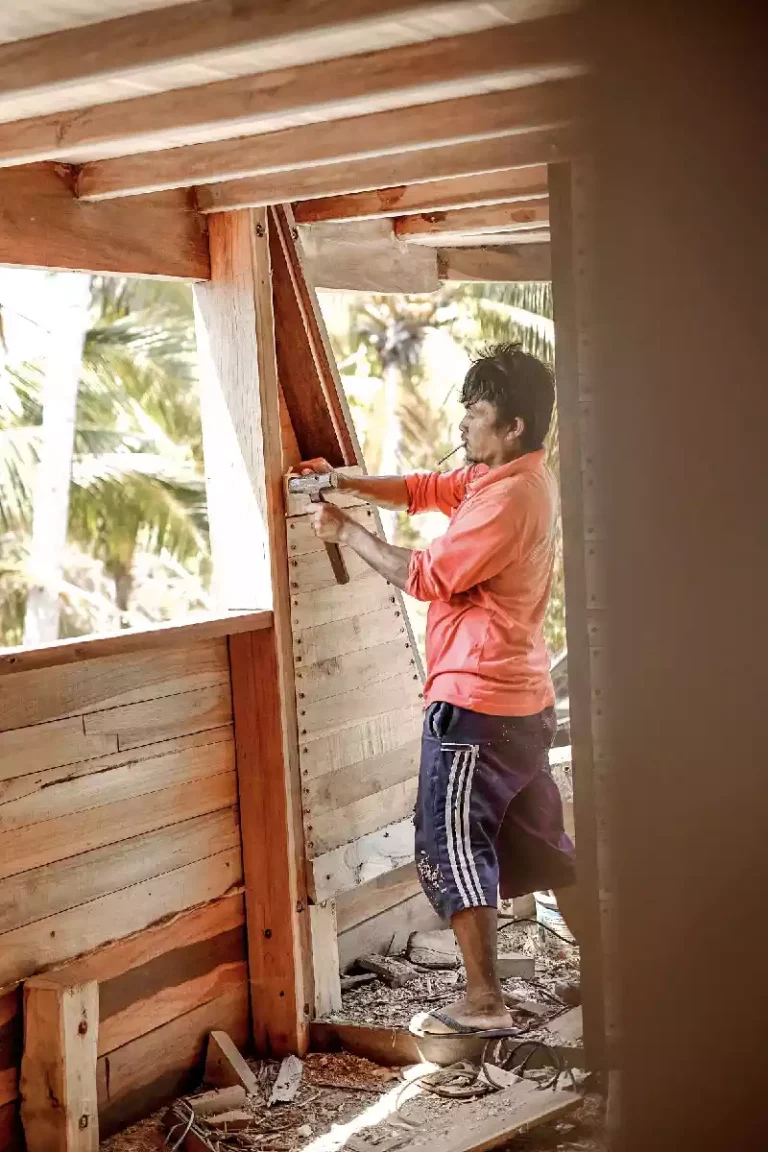
Interior Fit-Out Sequencing on a Phinisi Build
Phinisi fit-out follows one law: nothing closes until what lives behind it is installed, tested and photographed. The working sequence…

Construction & Engineering
Phinisi Deck Hardware: Sourcing Winches and Fittings That Last
Phinisi deck hardware splits into load-bearing items — winches, windlass, cleats, chainplates, blocks — which must be load-rated and documented,…

Construction & Engineering
Tank Capacities on New Phinisi: Planning Water, Fuel and Waste
Size phinisi tanks from the itinerary, not the hull: budget roughly 200 litres of fresh water per person per day…
Construction & Engineering
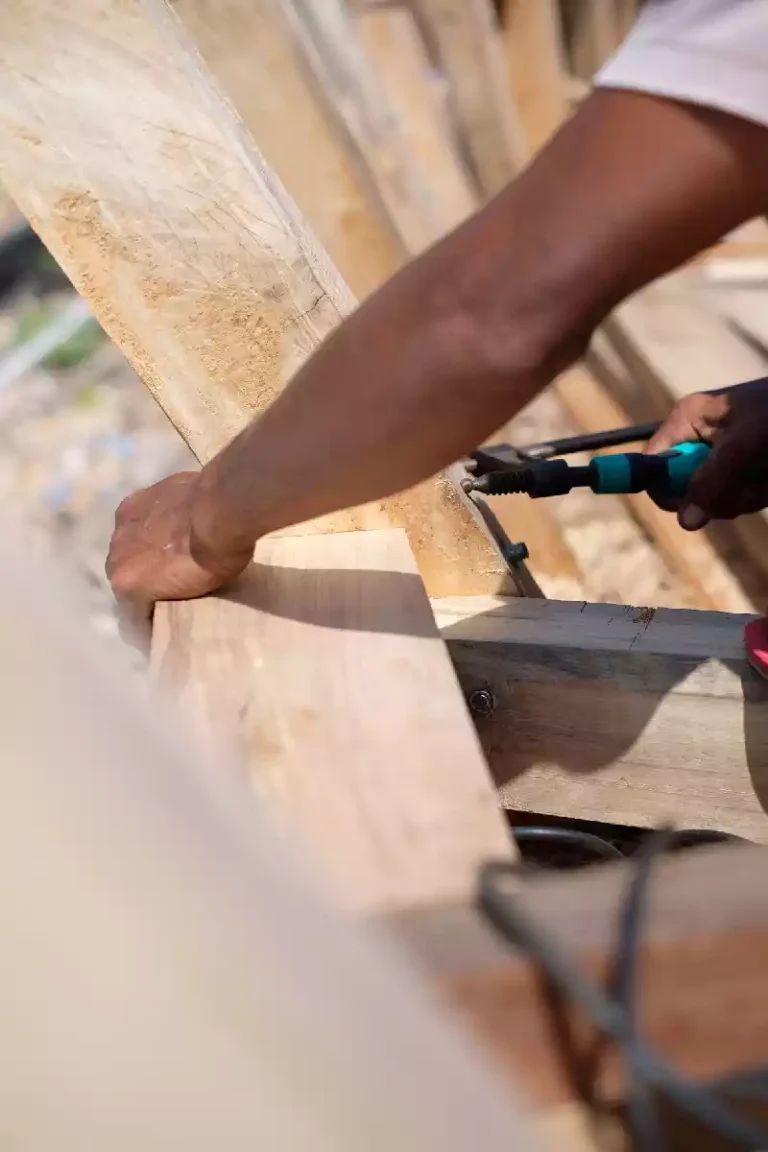
Engine Selection for a New Phinisi: Power Bands That Fit the Hull
A displacement phinisi needs far less power than owners assume: roughly 150–250 hp serves a 25–30 m hull, 300–500 hp a 35–45 m vessel,…
Construction & Engineering
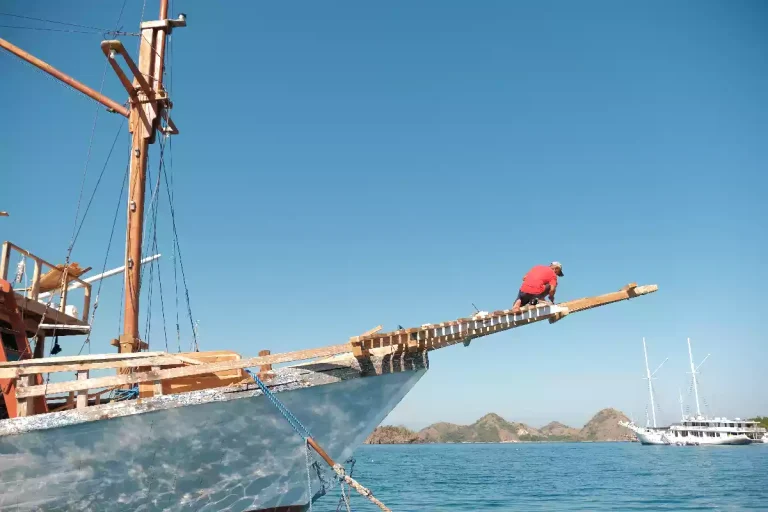
Masts and Rigging for New Phinisi: Makers, Materials, Loads
A new phinisi carries a gaff-ketch rig of two masts and typically seven sails. Spars are built either from laminated…

Construction & Engineering
The Aluminium Phinisi Question: Feasibility Beyond Tradition
An aluminium phinisi is feasible as a naval-architecture exercise — a metal hull carrying phinisi lines and rig — but…
Construction & Engineering
How to Specify Your Custom Phinisi in 2027: Engine, Cabin, and Tech Options
Specifying a custom phinisi in 2027 requires understanding a dynamic market. Build prices typically range from US$0.4–10 million, centered on…

Construction & Engineering
Phinisi Interior Design Trends: What’s New for Indonesian Luxury Yachts
The phinisi-building niche in Indonesia is a rapidly expanding luxury and tourism segment within the broader marine vessel market. Build…