
Construction & Engineering
Tank Capacities on New Phinisi: Planning Water, Fuel and Waste
Size phinisi tanks from the itinerary, not the hull: budget roughly 200 litres of fresh water per person per day (halved with a watermaker), fuel for the longest planned leg plus 30% reserve, and black-water holding for at least three days of full occupancy. On a 12-guest charter phinisi that typically means 8,000–15,000 litres of water, 10,000–20,000 litres of fuel, and 2,000–4,000 litres of holding.
Tanks are decided in week one and lived with for thirty years. They sit under everything, they define trim, and retrofitting capacity into a finished phinisi means surgery. Yet tankage receives less owner attention than cushion fabric. The arithmetic below comes from vessels actually running Komodo and Raja Ampat rotations, and it slots into the machinery decisions covered in our engine selection guide.
Fresh Water: the Comfort Ceiling
Luxury charter consumption runs 150–250 litres per person per day once showers after every dive, galley load and laundry are counted honestly. Twelve guests plus ten crew at 200 litres is 4,400 litres a day — a 10,000-litre bank without a watermaker gives just over two days of autonomy. The modern answer is hybrid: tankage for two to three days plus a watermaker of 3,000–6,000 litres per day capacity, letting tanks act as buffer rather than sole supply. Specify the watermaker with a proper energy budget (it will shape genset sizing) and always keep enough stored water to finish a trip if the membrane fails in Raja Ampat, where the nearest service technician is a flight away. Guest expectations at this level are set out across our liveaboard construction services page.
Fuel: Range Is an Itinerary Question
Compute the longest realistic leg — for most operators the repositioning run between Komodo and Raja Ampat seasons, on the order of a thousand nautical miles — at honest cruise burn, add generator consumption for the same days, then add 30% reserve. A 300 hp main at cruise plus hotel gensets on a 35 m charter vessel typically wants 12,000–18,000 litres to make seasonal repositioning without bunkering anxiety. Split the volume across multiple tanks with a day tank fed through duplex filtration: Indonesian port fuel quality varies, and the day-tank arrangement is your protection against a bad bunkering ruining a charter. Fit sight gauges or calibrated sounding tubes — electronic senders fail; dipsticks do not.
Grey, Black and the Marine-Park Reality
Komodo and Raja Ampat are protected waters, and discharge discipline is both regulation and reputation. Specify black-water holding for a minimum of three days at full occupancy — 2,000–4,000 litres on a 12-guest vessel — with deck pump-out fittings and a treatment unit if your operating pattern keeps you inside park boundaries for long stretches. Grey water from galleys and showers is higher-volume; route it through grease traps to holding where itineraries demand. This is an area where building right exceeds current enforcement — and where charter agents increasingly audit before contracting a vessel, part of the commercial standard described in our charter-yacht builder guide.
Materials, Placement and Inspection
Stainless (316L) and polyethylene tanks dominate modern builds; fiberglass tanks built into the hull save space but must be epoxy-lined and inspectable. Avoid mild-steel water tanks in any form. Placement drives trim: fuel amidships and low, water banks balanced port and starboard with crossovers, holding tanks near their discharge points. Every tank needs a manhole for cleaning, sounding access, and vents terminating where odour cannot reach guest areas — obvious on paper, routinely missed in yards. Have tank pressure tests witnessed and logged at the machinery milestone, alongside the checks in our disbursement map, because a weeping fuel tank under a finished sole is the most miserable defect a new boat can hand you.
Frequently Asked Questions
Can I rely on a watermaker and cut water tankage hard?
Cut, yes; hard, no. Two days of stored water at full occupancy is the sensible floor — membranes foul, high-pressure pumps fail, and silty anchorages force shutdowns. Operators who went below that floor have all bought water by barge at least once, mid-charter, at memorable cost.
How do tanks affect stability paperwork?
Significantly — free-surface effect from part-filled wide tanks reduces effective stability, which is why big volumes get baffles and why the stability book assumes stated tank states. Keep tank geometry tall rather than wide where possible, and declare final capacities to whoever runs your inclining and stability work before trials.
What is the right number of separate fuel tanks?
Three or more on charter sizes: two main storage tanks plus a day tank. This lets you isolate a contaminated bunkering, trim by transferring, and always feed engines from settled, filtered fuel. Single-tank arrangements save little and risk the whole season on one bad fuel dock.
Are integral wooden tanks still acceptable?
Traditional rice-hull-sealed timber water tanks exist on heritage vessels, but modern builds should not specify them: they are impossible to warrant, hard to clean, and every surveyor will question them. Use them for storytelling, not for storage.
How should tanks be commissioned before handover?
Every tank gets a documented sequence: pressure or head test witnessed and logged, interior inspection through manholes, calibration of gauges against known volumes, and a first-fill flush — water tanks sanitised, fuel tanks polished after construction debris settles. Fold the records into the trial documentation; a tank commissioned on paper only reveals its shortcuts during a charter.
We help owners turn itineraries into tank schedules before the keel is laid. Request a consultation, WhatsApp +62 811 3941 4563, or email [email protected].
Keep reading
More from the yard.
Construction & Engineering
Interior Fit-Out Sequencing on a Phinisi Build
Phinisi fit-out follows one law: nothing closes until what lives behind it is installed, tested and photographed. The working sequence…

Construction & Engineering
Phinisi Deck Hardware: Sourcing Winches and Fittings That Last
Phinisi deck hardware splits into load-bearing items — winches, windlass, cleats, chainplates, blocks — which must be load-rated and documented,…

Construction & Engineering
Engine Selection for a New Phinisi: Power Bands That Fit the Hull
A displacement phinisi needs far less power than owners assume: roughly 150–250 hp serves a 25–30 m hull, 300–500 hp a 35–45 m vessel,…
Construction & Engineering
Masts and Rigging for New Phinisi: Makers, Materials, Loads
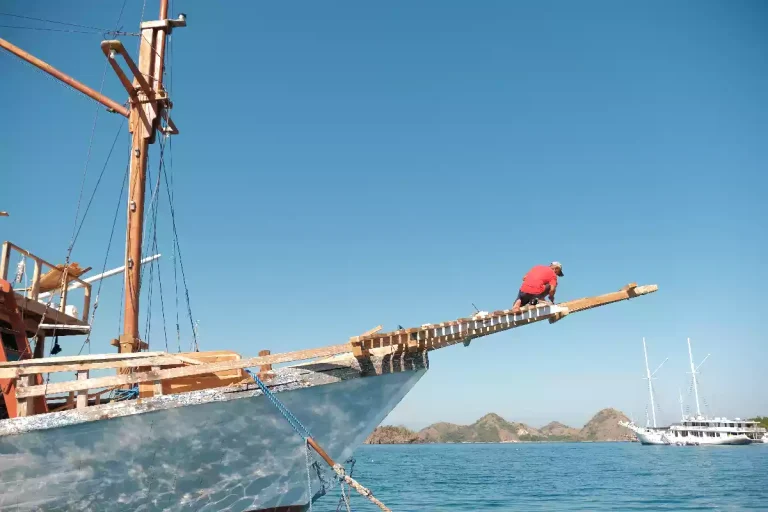
A new phinisi carries a gaff-ketch rig of two masts and typically seven sails. Spars are built either from laminated…
Construction & Engineering
Fiberglass-Sheathed Phinisi Hulls: Hybrid Construction Explained
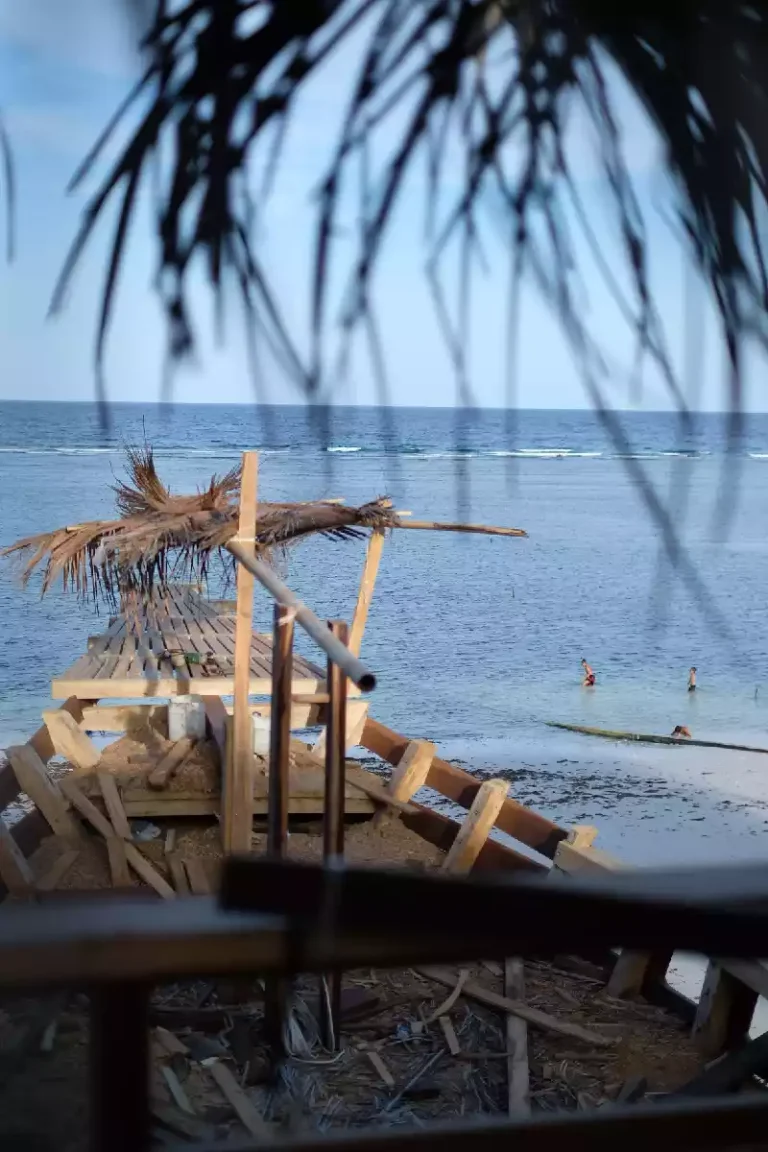
A fiberglass-sheathed phinisi is a traditionally planked wooden hull wrapped below and around the waterline in epoxy-set glass cloth. Done…

Construction & Engineering
The Aluminium Phinisi Question: Feasibility Beyond Tradition
An aluminium phinisi is feasible as a naval-architecture exercise — a metal hull carrying phinisi lines and rig — but…
Construction & Engineering
How to Specify Your Custom Phinisi in 2027: Engine, Cabin, and Tech Options
Specifying a custom phinisi in 2027 requires understanding a dynamic market. Build prices typically range from US$0.4–10 million, centered on…

Construction & Engineering
Phinisi Interior Design Trends: What’s New for Indonesian Luxury Yachts
The phinisi-building niche in Indonesia is a rapidly expanding luxury and tourism segment within the broader marine vessel market. Build…