
Construction & Engineering
Engine Selection for a New Phinisi: Power Bands That Fit the Hull

A displacement phinisi needs far less power than owners assume: roughly 150–250 hp serves a 25–30 m hull, 300–500 hp a 35–45 m vessel, single screw, turning a large slow propeller through a reduction gearbox. Over-powering buys almost no speed — hull speed is set by waterline length — and costs weight, fuel and money for the life of the boat.
Engine selection is where modern money most often fights physics. A phinisi hull is a heavy displacement form: it will reach the speed its waterline allows — typically 8.5–10.5 knots for charter sizes — and then convert every additional horsepower into wake and noise. The right question is not “how much power” but “which engine holds 80% of hull speed all day, every day, for twenty years, with parts available in Indonesian ports.” That framing changes the shortlist entirely. It also feeds tankage, covered in our companion piece on planning water, fuel and waste capacity.
Power Bands by Vessel Size
Working figures from the current fleet: a 25–30 m private phinisi cruises efficiently on a single 150–250 hp medium-speed diesel; a 30–38 m charter vessel on 250–400 hp; 40 m-plus expedition builds on 400–600 hp, occasionally twins where redundancy or manoeuvring demands it. Aim for the engine to make cruise speed at roughly 70–80% of rated rpm — the band where diesels live longest and burn cleanest. As a sanity check, if a proposal’s installed power implies more than about 2.5 hp per ton of displacement on a hull like this, someone is selling you an engine, not a solution. Fuel burn falls out naturally: a 300 hp diesel at cruise sips a fraction of what its rating suggests, which is why realistic range planning starts with the power-band decision.
Gearbox, Shaft and Propeller: the Half That Gets Forgotten
The engine is half the drivetrain. A deep reduction ratio — commonly 3:1 to 5:1 at these sizes — lets a big four- or five-blade propeller work efficiently at low rpm, which suits the hull, cuts noise and improves stopping power. Shaft diameter, bearing spacing and stern-gland type belong in the specification, not in the yard’s habits; misalignment is the single most common machinery defect found at trials, which is why alignment readings are a named check in our sea-trial protocol guide. Insist on an engineered prop calculation from the engine distributor — the major brands provide it free against hull data — rather than copying the prop of the boat launched last month.
Brands, Parts and the Indonesian Support Map
Choose the dealer network, then the engine. Yanmar, Mitsubishi, Cummins, Doosan and Weichai all propel the fleet successfully; what separates them for you is filter availability in Labuan Bajo, injector service in Makassar or Surabaya, and a distributor who answers during your charter season. Marinised truck-engine conversions circulate in yard towns at tempting prices — they run, but insurance surveys, class comfort and resale all favour genuine marine units with paperwork. Buy the engine through a channel that provides commissioning support and warranty service in Indonesia; a warranty serviced from Singapore only helps when you can get the boat to it. Machinery choices ripple into project economics, mapped in our construction cost and pricing guide.
Installation Details That Decide the Next Decade
Specify and verify: engine beds sized to spread load into floors, with hardwood or steel girders bolted, not spiked; flexible mounts matched to the gearbox type; a sea-water system with accessible strainers and a standpipe arrangement that cannot siphon; dry exhaust or a properly engineered wet system with riser height calculated; fuel supply through a day tank with duplex filters; and genuine engine-room ventilation — fans sized to the engine’s combustion and cooling air demand, not to the space left over. Insist the installation is witnessed at the machinery milestone before ceilings close, the same discipline your payment map applies to every stage.
Frequently Asked Questions
Single engine or twins on a charter phinisi?
Single, for most builds: simpler, less costly, more efficient, and the hull manoeuvres acceptably with a bow thruster. Twins earn their cost on 45 m-plus vessels, tight-schedule operations valuing redundancy, or owners planning remote expedition routes far from tow assistance.
What cruise speed should I actually plan itineraries around?
Plan on 8–9 knots for most charter-size phinisi, regardless of brochure numbers. That is the honest all-day speed in mixed sea states, and itineraries built on it arrive relaxed. The difference between 9 and 10.5 knots costs disproportionate fuel on a displacement hull.
Are electric or hybrid drivetrains realistic for phinisi yet?
Hybrid arrangements — diesel main with electric house systems and quiet-hours battery banks — are practical now and increasingly specified. Full-electric propulsion remains range-limited for Komodo and Raja Ampat distances; the honest current play is right-sized diesel plus serious battery hotel loads, ready to evolve.
How long should a properly selected engine last?
A continuous-duty marine diesel loaded correctly at cruise should run 20,000–30,000 hours between major overhauls — decades of charter seasons — provided fuel is polished, cooling is maintained and it is not idled endlessly at anchor. Over-powered engines loafing at 30% load die younger than hard-working right-sized ones.
What about a wing engine or get-home drive?
On single-screw vessels running remote itineraries, a small wing engine or hydraulic get-home drive off the generator adds genuine security for modest cost and weight. It will not make passage speed — three to four knots is typical — but it converts a dead main engine at sea from an emergency into an inconvenience, which is exactly the standard charter operations should buy.
For an engine and drivetrain specification matched to your hull and itinerary, request a consultation, WhatsApp +62 811 3941 4563, or email [email protected].
Keep reading
More from the yard.
Construction & Engineering
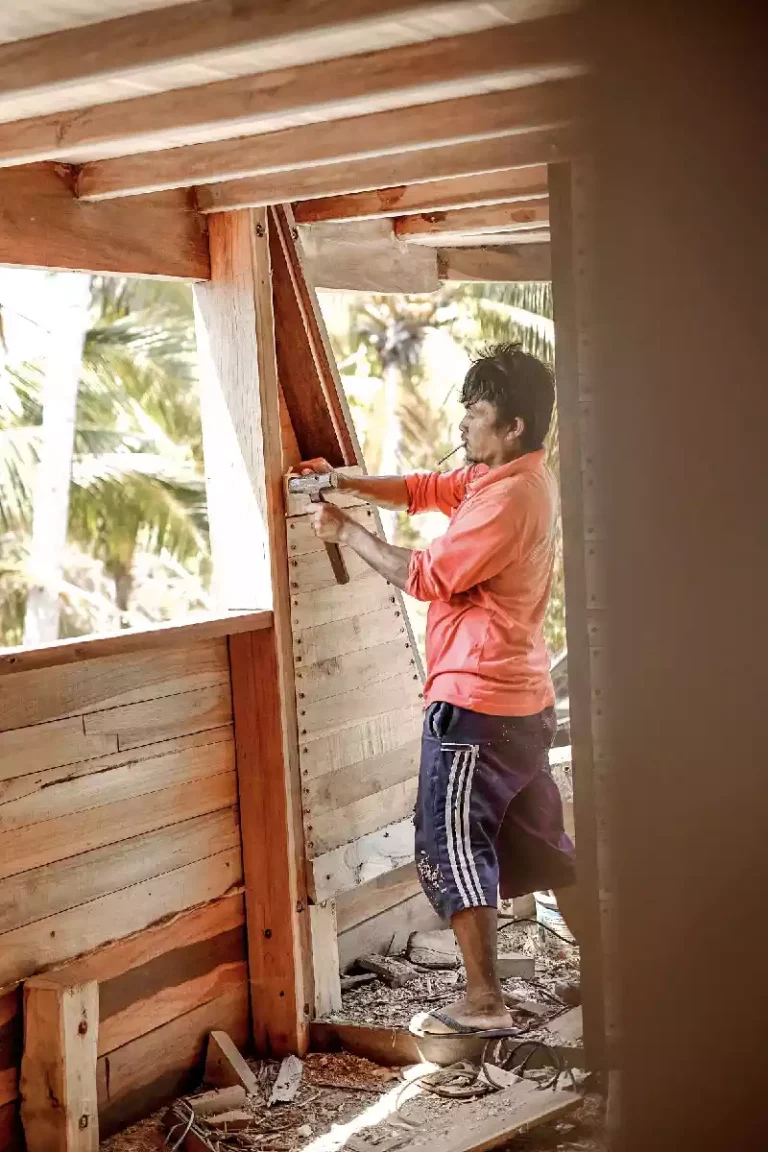
Interior Fit-Out Sequencing on a Phinisi Build
Phinisi fit-out follows one law: nothing closes until what lives behind it is installed, tested and photographed. The working sequence…

Construction & Engineering
Phinisi Deck Hardware: Sourcing Winches and Fittings That Last
Phinisi deck hardware splits into load-bearing items — winches, windlass, cleats, chainplates, blocks — which must be load-rated and documented,…

Construction & Engineering
Tank Capacities on New Phinisi: Planning Water, Fuel and Waste
Size phinisi tanks from the itinerary, not the hull: budget roughly 200 litres of fresh water per person per day…

Construction & Engineering
Masts and Rigging for New Phinisi: Makers, Materials, Loads
A new phinisi carries a gaff-ketch rig of two masts and typically seven sails. Spars are built either from laminated…

Construction & Engineering
Fiberglass-Sheathed Phinisi Hulls: Hybrid Construction Explained
A fiberglass-sheathed phinisi is a traditionally planked wooden hull wrapped below and around the waterline in epoxy-set glass cloth. Done…

Construction & Engineering
The Aluminium Phinisi Question: Feasibility Beyond Tradition
An aluminium phinisi is feasible as a naval-architecture exercise — a metal hull carrying phinisi lines and rig — but…
Construction & Engineering
How to Specify Your Custom Phinisi in 2027: Engine, Cabin, and Tech Options
Specifying a custom phinisi in 2027 requires understanding a dynamic market. Build prices typically range from US$0.4–10 million, centered on…

Construction & Engineering
Phinisi Interior Design Trends: What’s New for Indonesian Luxury Yachts
The phinisi-building niche in Indonesia is a rapidly expanding luxury and tourism segment within the broader marine vessel market. Build…