
Contracts & Payments
Insuring a Phinisi While It’s Still on the Slipway
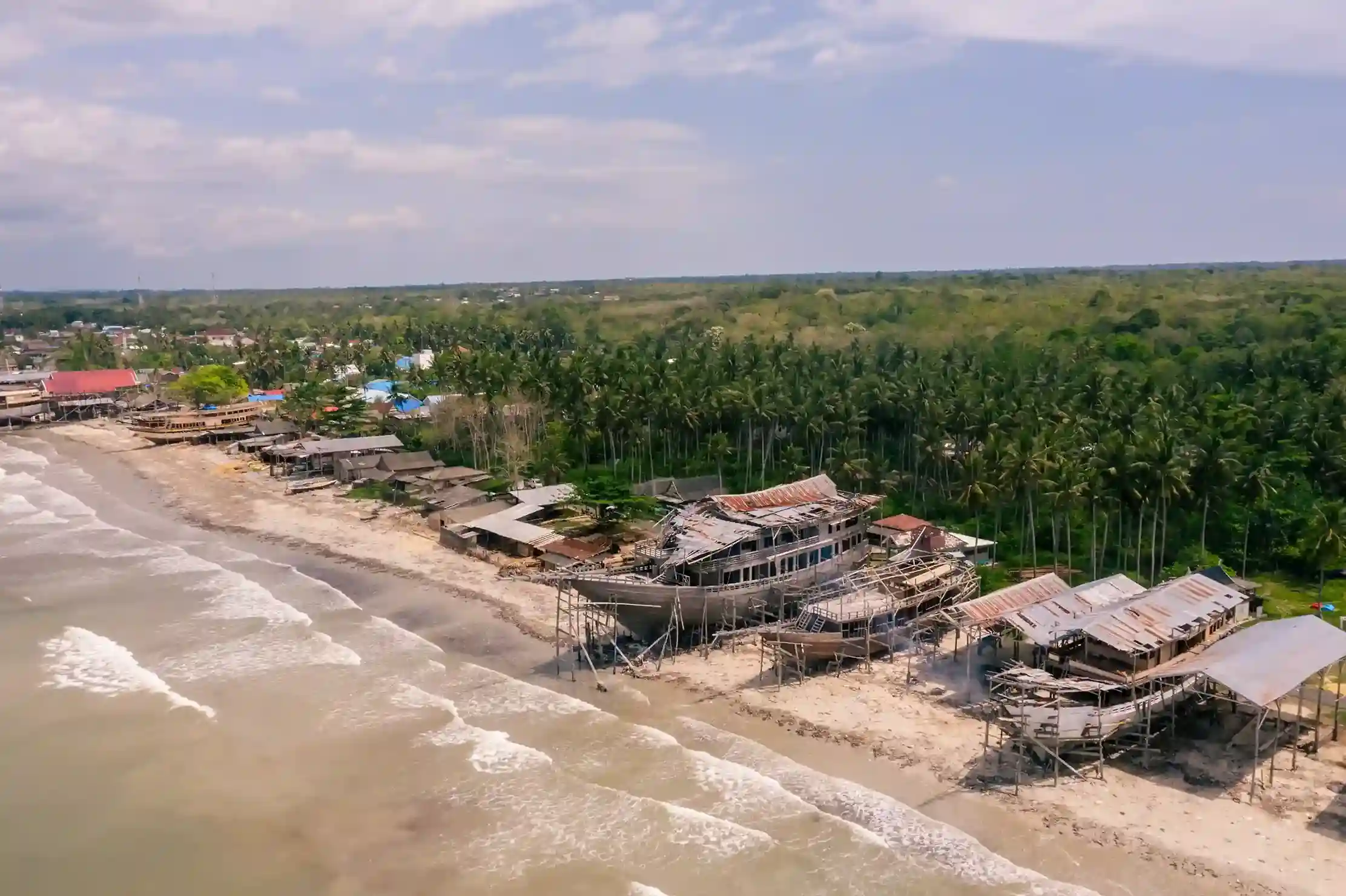
A phinisi under construction is insured through builder’s risk (construction all-risks) cover: a policy over the growing hull, materials on site and often materials in transit, with the sum insured stepping up as milestone payments land. Indonesian marine insurers and regional specialists write this cover; premiums typically run 0.5%–1.5% of contract value across the build. Without it, a slipway fire consumes your paid milestones with no recourse but the yard’s goodwill.
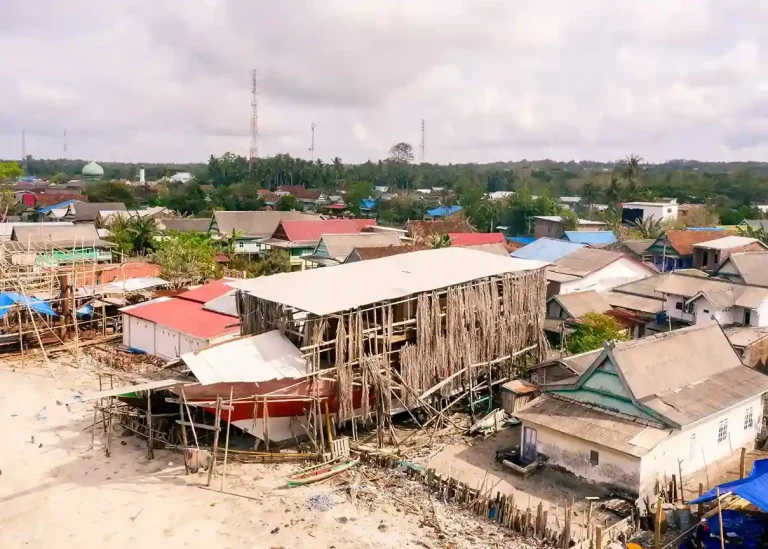
Owners insure finished yachts reflexively and building projects almost never — yet the eighteen months on the slipway concentrate risk remarkably: open flame near shavings, tropical storms over an unballasted hull, timber stacks worth six figures in an open yard, and a launch operation that is pure controlled risk. Meanwhile your money has left, stage by stage, under the disbursement map. Builder’s risk closes the gap between money paid and vessel owned.
What Construction All-Risks Actually Covers
A well-structured policy covers physical loss or damage to the works — hull, machinery and materials once allocated to the project — from fire, theft, storm, flood, accidental damage and launch/haul operations, from keel-laying to handover. Extensions worth buying: materials in transit (your engine crossing from Surabaya, timber trucked from Kalimantan), temporary storage off-site, and trials cover extending protection through the sea-trial period. Standard exclusions to read twice: defective workmanship itself (the policy pays for resulting damage, not for redoing bad work — that is what the DLP is for), gradual deterioration, and war/political risk unless bought back.
Who Insures Wooden Builds in Indonesia
Three routes exist. Indonesian marine insurers write construction cover for the domestic fleet and understand yard-town realities; policies are IDR-denominated with local claims handling. Regional marine specialists in Singapore write USD policies with London-market security, preferred by foreign owners on larger builds — expect surveyor warranties attached. Or the yard’s own open cover, where an established builder maintains a floating policy across projects; verify it genuinely exists, read the certificate, and confirm your project’s sum insured, because “we are insured” in a yard town can mean anything from a real policy to an intention. On builds above roughly USD 500,000, a broker who has placed wooden-vessel construction risk before earns their fee simply by knowing which underwriters will not flee the word “wooden.”
Structuring Sums, Interests and Warranties
Set the sum insured to track cumulative payments plus materials on site, stepping at each milestone — insuring the full contract price from day one wastes premium; insuring only the deposit leaves every later stage naked. Name both parties: the yard as the party in control of the works, you as owner with an insurable interest in paid stages — a joint-names policy with a loss-payee clause routing claims money to rebuilding your boat rather than the yard’s creditors. Expect and negotiate warranties: hot-work permits, night watchman, fire-fighting equipment on the slip, timber stack separation. These are not bureaucracy; they are the underwriter pricing the exact risks that actually destroy yard projects, and complying with them costs very little. Your owner’s representative can verify warranty compliance during routine visits.
Launch Day and the Handover Transition
Launch is the single highest-severity day of the project — a heavy hull moving on greased ways or airbags into its first float. Confirm the policy explicitly covers launching, including salvage and wreck removal if it goes wrong; some regional policies carve launch into a separately declared operation. From successful launch through trials, cover continues under the construction policy; at acceptance and handover, marine hull insurance takes over — arrange it in advance so there is no uninsured afternoon between signatures. If the vessel then departs Indonesia, the delivery voyage needs its own declared cover, dovetailing with the process in our export paperwork guide.
Frequently Asked Questions
What does builder’s risk cost on a typical phinisi build?
Indicatively 0.5%–1.5% of contract value in total across the build period, varying with yard fire precautions, location, security and claims history. On a USD 800,000 project that is USD 4,000–12,000 — about the price of one guest cabin’s joinery, protecting everything.
Can I rely on the yard’s insurance alone?
Only after reading the certificate: confirm the policy is current, the sum insured covers your project specifically, your interest is noted, and claims proceeds are payable in a way that rebuilds your vessel. If any of those fail, place your own cover — double insurance is a solvable coordination problem; no insurance is not.
Are traditional yards insurable at all — open sheds, beach slipways?
Yes. Underwriters price wooden construction in open yards routinely; they respond with warranties (hot-work controls, watchmen, extinguishers) rather than refusal. A yard that will not accept basic fire-precaution warranties is telling you something the premium was about to tell you anyway.
Does the policy cover my deposit if the yard simply fails financially?
No — insolvency is not physical loss. Protection against yard failure comes from the contract side: progressive title transfer, escrow structure and retention, as covered in our contracts guide. Builder’s risk and contract security are two different walls; you want both standing.
When exactly should the builder’s risk policy incept?
At the earlier of first payment or first materials arriving on site — not at keel-laying. The timber stack is often the largest uninsured value in the project’s early months, sitting in an open yard through a fire season. Backdating cover is impossible after a loss; incepting a few weeks early costs almost nothing.
We can introduce brokers experienced with Indonesian wooden-vessel construction risk and review certificates before you pay a milestone. Request an introduction, WhatsApp +62 811 3941 4563, or email [email protected].
Keep reading
More from the yard.
Uncategorized
Commissioning a Phinisi in 2026: What Komodo Charters Teach
Future owners commissioning a phinisi ask three questions more than any others: which cabin mix actually earns, what power and…
Planning & Supervision
Charter-Spec vs Private-Spec Phinisi: Build Choices That Diverge
A charter-spec phinisi is engineered around revenue: maximum guest cabins with identical quality, robust crew areas, redundant systems that protect…
Planning & Supervision
Yard Capacity in 2027: Booking Your Phinisi Build Slot Early
Serious phinisi yards enter 2027 with slipways committed twelve to eighteen months ahead: charter-fleet renewal, post-quake rebuilding demand and a…
Planning & Supervision
The Owner Visit Schedule: When to Fly In During a Build
Five owner visits carry most of a build's value: contract signing and yard walk, keel-laying with the timber on site,…
Construction & Engineering
Interior Fit-Out Sequencing on a Phinisi Build
Phinisi fit-out follows one law: nothing closes until what lives behind it is installed, tested and photographed. The working sequence…
Construction & Engineering
Phinisi Deck Hardware: Sourcing Winches and Fittings That Last
Phinisi deck hardware splits into load-bearing items — winches, windlass, cleats, chainplates, blocks — which must be load-rated and documented,…
Planning & Supervision
Supervising From Afar: Monthly Build Reports That Tell the Truth
A truthful monthly build report has five parts: progress against the contractual milestone table, photographs from fixed repeat vantage points,…
Planning & Supervision
Sulawesi vs Kalimantan Yards: Logistics Behind the Comparison
The Sulawesi–Kalimantan choice is a logistics decision wearing a heritage costume: Sulawesi yards sit at the heart of the Konjo…