
Contracts & Payments
Phinisi Build Contracts: Milestones, Penalties and Escrow Terms

A sound phinisi build contract ties every payment to a verifiable physical milestone, caps delay damages at a stated percentage per week, and routes at least the deposit through an escrow or joint-signature account. Indonesian yards will sign these terms when they are drafted bilingually and reviewed by a notaris familiar with maritime work.
Most disputes between foreign owners and Indonesian yards do not start with bad workmanship. They start with a two-page agreement that never defined what “hull complete” means, never said who pays when ironwood deliveries slip, and never named the account the money sits in. A phinisi is a 18-to-30-month project involving hundreds of thousands of dollars; the contract deserves the same craftsmanship as the vessel. Any experienced phinisi builder Indonesia owners shortlist should welcome this structure rather than resist it.
The Milestone Schedule Is the Contract’s Spine
Write milestones as physical states that a third party can photograph and verify, not as percentages of “progress.” A workable sequence for a 30–40 m wooden phinisi looks like this:
- Keel laid and stem raised — timber on site, backbone assembled and faired.
- Framing complete — all frames erected, floors fitted, hull shape locked.
- Planking closed — hull watertight to the sheer, caulking underway.
- Decks and superstructure framed — deck beams, houses and bulwarks in place.
- Engine and tanks installed — machinery aligned, shafts fitted, tanks pressure-tested.
- Launch and rig — hull afloat, masts stepped, systems live.
- Sea trials passed and handover — defects list cleared, documents transferred.
Each milestone needs three attachments: a definition, an evidence standard (dated photographs, surveyor sign-off, or both), and the payment it releases. Our design-to-delivery process guide shows how these stages map onto a real build calendar.
Penalty and Delay Clauses That Survive Reality
Liquidated damages of 0.25%–0.5% of contract value per week of delay, capped at 5%–7.5% total, are enforceable and fair. Anything harsher pushes a yard toward corner-cutting in the final months, which costs you more than the delay ever would. Balance the clause with excusable delays: force majeure, owner-driven change orders, and documented timber-supply interruptions. Require the yard to notify delays in writing within seven days — silence converts an excusable delay into a penalised one. Add a mirror clause in your favour: if you are late on a milestone payment, the yard may pause work after fourteen days’ notice, and the delivery date extends day-for-day.
Escrow and Account Mechanics in Indonesia
Full third-party escrow is still uncommon in Indonesian yard towns, but three workable structures exist. First, a notaris-administered holding account releasing funds against milestone certificates. Second, a dual-signature bank account requiring both the owner’s representative and the yard principal to sign. Third, staged transfers from your foreign account with each transfer referencing the milestone certificate number — weakest protection, strongest paper trail. Whichever you choose, keep the deposit at or below 20% and never let cumulative payments run more than one milestone ahead of verified work. The disbursement logic is mapped in detail in our companion piece on milestone payments to Indonesian yards.
Clauses Owners Forget Until It Hurts
Title transfer should pass to you progressively as payments land, with the keel plate marked accordingly — this protects you if the yard hits financial trouble mid-build. Name the timber species and grade in an annex, referencing legality documents discussed in our SVLK timber verification guide. Fix the governing language (make it the Indonesian text, with a certified English translation, since that is what a local court reads). Specify a defect liability period of at least six months after handover, and state where arbitration happens — BANI in Jakarta is the pragmatic choice. Finally, attach the specification as a numbered annex; a spec that lives in WhatsApp messages is not a spec.
Budget Context Before You Sign
A contract is only as honest as the number at the top of it. Cross-check the yard’s quotation against our cost-per-meter breakdown for 2027 before you negotiate penalties — a price 30% under market is itself a warning that milestones will slip. For charter-oriented projects, the commercial clauses differ again; see the build choices covered in our charter-yacht builder guide.
Frequently Asked Questions
How many pages should a proper phinisi build contract run?
Expect 15–25 pages plus annexes: specification, milestone table, payment schedule, drawing list and timber schedule. Shorter documents almost always omit evidence standards for milestones, which is where disputes begin. A bilingual format roughly doubles the page count but halves the ambiguity.
Will Indonesian yards accept escrow at all?
Established yards accept notaris-held accounts or dual-signature arrangements, especially for foreign clients, because the structure also protects them from payment default. What most refuse is full offshore escrow releasing only at delivery — their cash flow genuinely depends on staged funding of timber and labour.
What is a fair deposit for a new phinisi build?
Between 10% and 20% of contract value in USD terms. The deposit covers timber procurement, which is the yard’s largest early outlay. A yard asking 40% up front is financing older debts with your project — treat that as a structural red flag, not a negotiating position.
Can I add a penalty for quality defects, not just delay?
Yes — tie it to the defects list at sea trials: items unresolved after an agreed cure period convert to a costed deduction from the final payment. This is cleaner than percentage quality penalties, which are nearly impossible to adjudicate on handcrafted wooden vessels.
We draft and review milestone schedules on live projects across Sulawesi and Kalimantan. To pressure-test a contract before you sign it, request a consultation, message +62 811 3941 4563 on WhatsApp, or write to [email protected].
Keep reading
More from the yard.

Uncategorized
Commissioning a Phinisi in 2026: What Komodo Charters Teach
Future owners commissioning a phinisi ask three questions more than any others: which cabin mix actually earns, what power and…

Planning & Supervision
Charter-Spec vs Private-Spec Phinisi: Build Choices That Diverge
A charter-spec phinisi is engineered around revenue: maximum guest cabins with identical quality, robust crew areas, redundant systems that protect…

Planning & Supervision
Yard Capacity in 2027: Booking Your Phinisi Build Slot Early
Serious phinisi yards enter 2027 with slipways committed twelve to eighteen months ahead: charter-fleet renewal, post-quake rebuilding demand and a…
Planning & Supervision
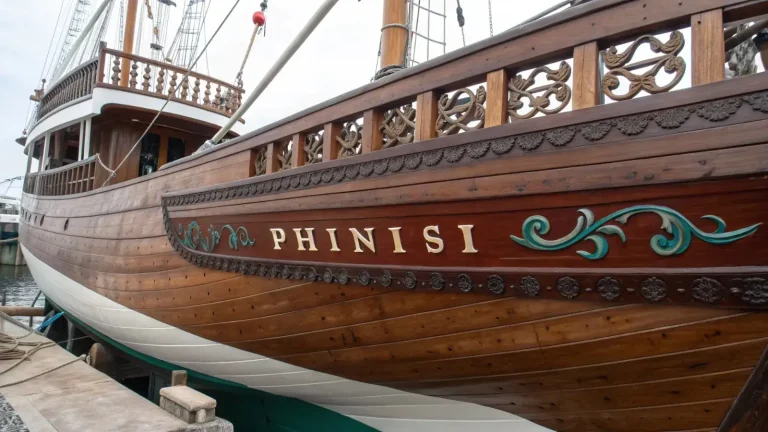
The Owner Visit Schedule: When to Fly In During a Build
Five owner visits carry most of a build's value: contract signing and yard walk, keel-laying with the timber on site,…
Construction & Engineering
Interior Fit-Out Sequencing on a Phinisi Build
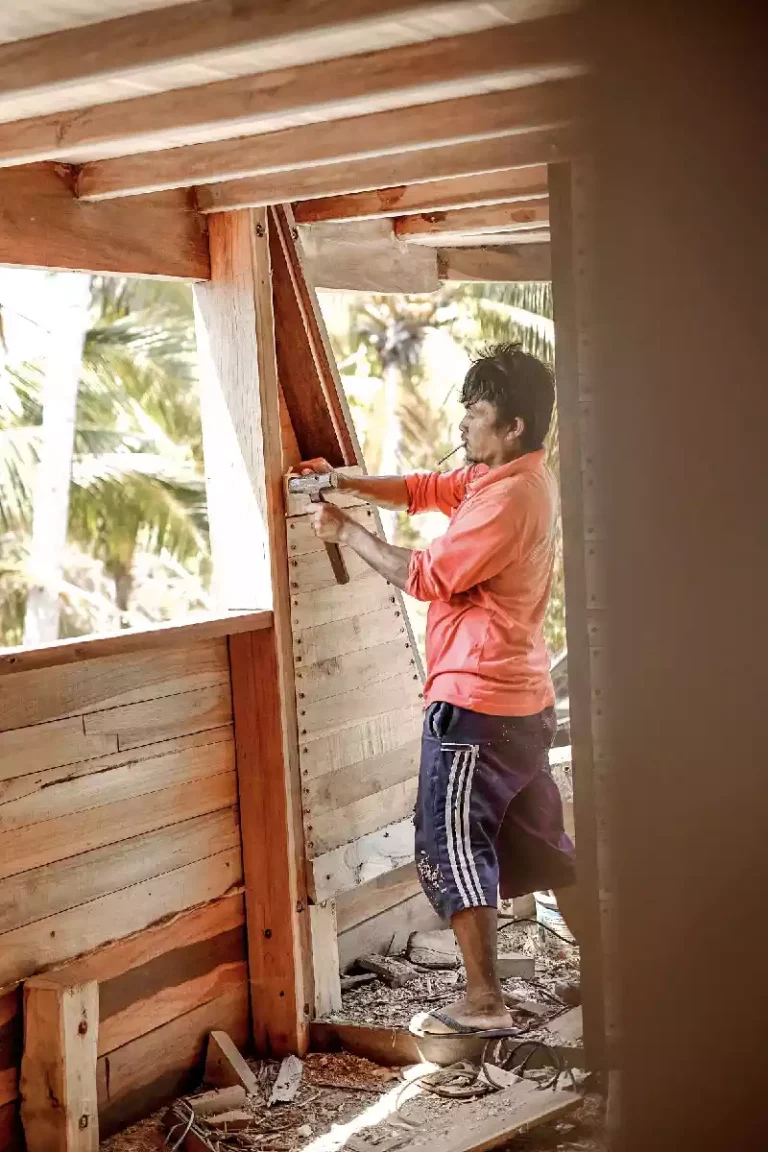
Phinisi fit-out follows one law: nothing closes until what lives behind it is installed, tested and photographed. The working sequence…

Construction & Engineering
Phinisi Deck Hardware: Sourcing Winches and Fittings That Last
Phinisi deck hardware splits into load-bearing items — winches, windlass, cleats, chainplates, blocks — which must be load-rated and documented,…

Planning & Supervision
Supervising From Afar: Monthly Build Reports That Tell the Truth
A truthful monthly build report has five parts: progress against the contractual milestone table, photographs from fixed repeat vantage points,…

Planning & Supervision
Sulawesi vs Kalimantan Yards: Logistics Behind the Comparison
The Sulawesi–Kalimantan choice is a logistics decision wearing a heritage costume: Sulawesi yards sit at the heart of the Konjo…