
Planning & Supervision
Charter-Spec vs Private-Spec Phinisi: Build Choices That Diverge

A charter-spec phinisi is engineered around revenue: maximum guest cabins with identical quality, robust crew areas, redundant systems that protect the schedule, and commercial compliance built in from the keel. A private-spec build spends the same length on fewer, larger spaces and personal taste. The hulls may be sisters; the boats diverge from the first layout sketch — and converting one into the other later is expensive.
“We might charter it sometimes” is the most consequential sentence in any design brief, because the two specifications pull the same hull in different directions at almost every decision. Declaring the vessel’s true purpose before design freeze is the highest-leverage optimisation available — the commercial context lives on our charter-yacht builder guide, and this piece maps the divergence decision by decision.
Layout: Revenue Mathematics vs Personal Space
Charter economics are cabin arithmetic: a 35–40 m charter phinisi wants five to seven guest cabins of equal ambition — agents sell “the boat”, and one visibly lesser cabin drags down every week it is part of — plus a genuine dive deck, a shaded saloon that seats every guest at once, and circulation that lets crew serve without crossing guest privacy. Private briefs spend the same metres oppositely: an owner’s suite claiming the best of the vessel, two or three guest cabins, a study or gym, and generous owner storage. The crew divide is starker still: charter service at Komodo standards needs crew berthing, a working galley and a separate crew mess sized for ten or more — space private briefs habitually raid, then regret at the first ambitious dinner party. Our liveaboard construction services page shows charter layouts in practice.
Systems: Redundancy Is a Charter Word
A private owner losing a generator rearranges the week; a charter operator losing one refunds it. Charter spec therefore doubles what protects the schedule: twin generators with genuine changeover, watermaker capacity above the tankage baselines, cold storage split across compartments, air-conditioning zoned so one failure never takes the whole guest deck, and a spares inventory treated as equipment rather than afterthought. Private builds may sensibly single-up and accept graceful degradation. The divergence extends to the engine room itself — charter vessels favour conservative, dealer-supported machinery per our engine selection guide, while private owners sometimes indulge preferences a charter manager would veto. Neither is wrong; they are answers to different questions.
Compliance, Class and Crew From the Keel
Commercial operation brings surveyed obligations — stability documentation, fire zones and escape routes, guest-count-driven safety equipment, crew certification — and retrofitting them into a finished private interior is carpentry with a chainsaw. Building charter-ready from the keel costs modestly; converting later costs seasons. The flag decision interacts here too: Indonesian-flag structures for domestic charter versus foreign flags for private cruising, the fork mapped in our export and flag guide. Finishes follow the same logic — charter interiors choose beautiful materials that survive two hundred guest-nights a year and can be renewed cabin by cabin between seasons; private interiors buy delicacy and uniqueness because only their owner wears them out. A vessel intended for management should involve the operator early: the charter management desk in Labuan Bajo reviews layouts at design stage precisely because crew flow and cabin mathematics decide a hull’s earning ceiling before the keel is laid.
The Hybrid Truth and the Resale Ledger
The honest hybrid exists, but it is a charter boat an owner enjoys, not a private boat that occasionally charters: cabin equality, crew spaces and compliance are either built in or absent. Owners planning managed charter with personal weeks should spec charter and reserve an owner’s cabin personality within it. The resale ledger rewards the same clarity — a compliant, equal-cabined, twin-generator phinisi sells into the operator market on its numbers, while a deeply personal private build waits for its twin soul to walk the dock. Whichever path you choose, declare it in the design brief, the contract annex and the budget conversation on our construction pricing guide — because every later stage prices the ambiguity you leave here.
Frequently Asked Questions
How much more does charter-spec cost than private-spec?
On equal length and finish level, expect charter spec to run 10%–20% higher — redundancy, crew areas, compliance and heavier-duty everything. The gap narrows in resale value and vanishes entirely once two or three chartered seasons of revenue enter the ledger.
Can a private phinisi do occasional charter legally?
Only by meeting commercial requirements for the flag and waters it charters in — there is no casual tier for paying guests. Some owners run limited charter under an operator’s structure; the vessel must still satisfy that structure’s survey standards, which is why “maybe charter” should be answered at design stage.
Which spec holds value better?
Charter-spec, in the Indonesian market: the buyer pool is operators with revenue models, and they price systems, compliance and cabin count. Exceptional private builds hold value as singular objects but sell more slowly. A charter-spec hull with a distinguished interior does best of all.
Do charter guests actually notice build-spec differences?
They notice outcomes: hot water that never falters, air-conditioning through a still night, a crew that appears rested, itineraries that hold when a pump dies. Those are all build-spec decisions wearing hospitality clothing — which is the entire argument for building charter-spec deliberately.
Does charter-spec limit how personal the interior can feel?
No — equality across guest cabins constrains layout, not character. Strong charter interiors carry distinctive identity through materials, art and craft detail while keeping the operational bones intact. What charter-spec actually forbids is fragility and asymmetry, and neither is a prerequisite for personality; the fleet’s most-booked vessels are also among its most distinctive.
We spec both paths and manage vessels after delivery. To pressure-test your brief before design freeze, request a specification consultation, WhatsApp +62 811 3941 4563, or email [email protected].
Keep reading
More from the yard.

Uncategorized
Commissioning a Phinisi in 2026: What Komodo Charters Teach
Future owners commissioning a phinisi ask three questions more than any others: which cabin mix actually earns, what power and…

Planning & Supervision
Yard Capacity in 2027: Booking Your Phinisi Build Slot Early
Serious phinisi yards enter 2027 with slipways committed twelve to eighteen months ahead: charter-fleet renewal, post-quake rebuilding demand and a…
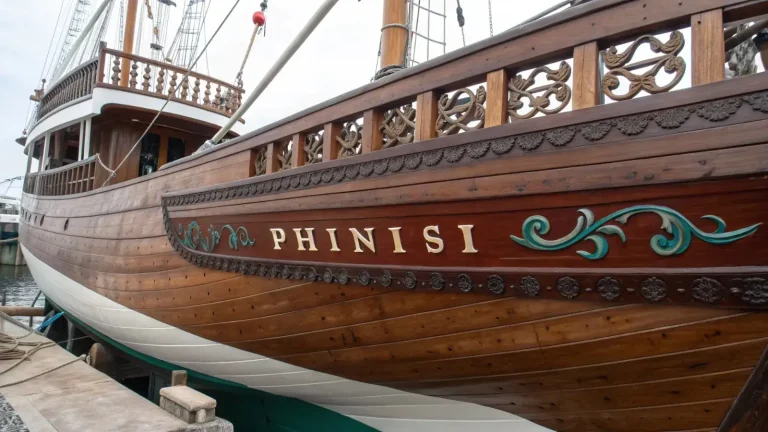
Planning & Supervision
The Owner Visit Schedule: When to Fly In During a Build
Five owner visits carry most of a build's value: contract signing and yard walk, keel-laying with the timber on site,…
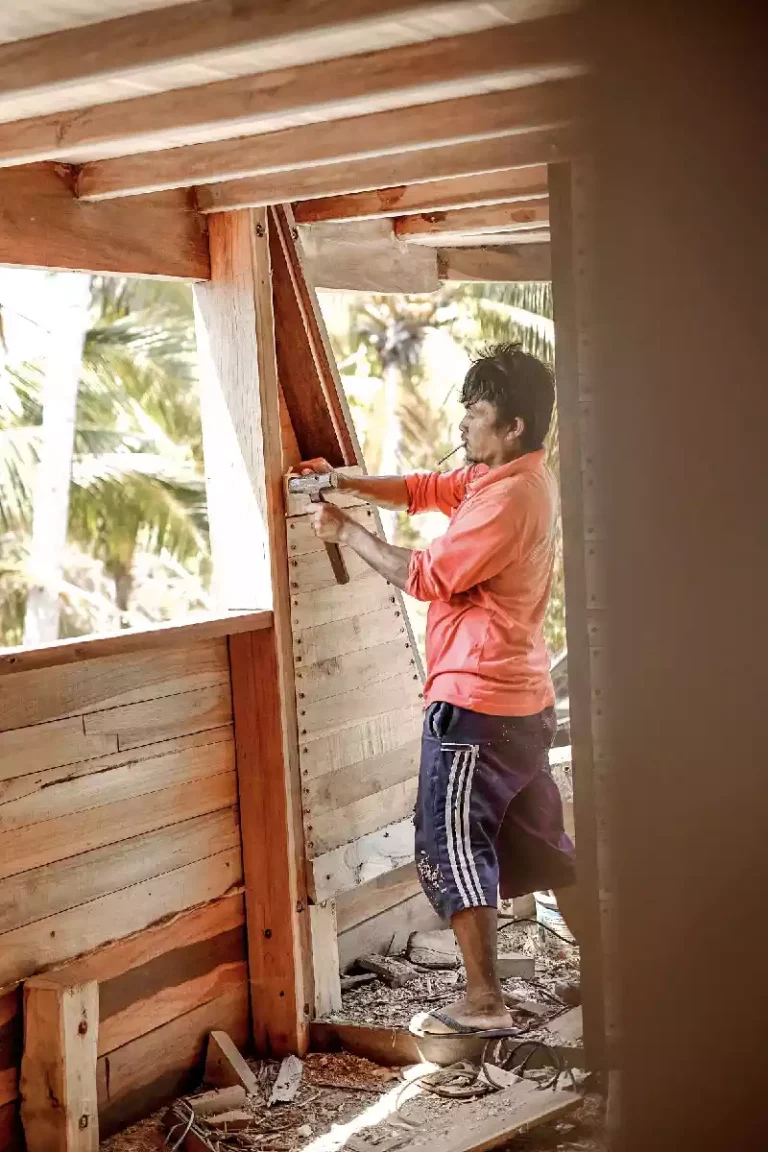
Construction & Engineering
Interior Fit-Out Sequencing on a Phinisi Build
Phinisi fit-out follows one law: nothing closes until what lives behind it is installed, tested and photographed. The working sequence…

Construction & Engineering
Phinisi Deck Hardware: Sourcing Winches and Fittings That Last
Phinisi deck hardware splits into load-bearing items — winches, windlass, cleats, chainplates, blocks — which must be load-rated and documented,…

Planning & Supervision
Supervising From Afar: Monthly Build Reports That Tell the Truth
A truthful monthly build report has five parts: progress against the contractual milestone table, photographs from fixed repeat vantage points,…

Planning & Supervision
Sulawesi vs Kalimantan Yards: Logistics Behind the Comparison
The Sulawesi–Kalimantan choice is a logistics decision wearing a heritage costume: Sulawesi yards sit at the heart of the Konjo…

Delivery, Trials & Export
Exporting a New Phinisi: Paperwork from Yard to Foreign Flag
Exporting a new phinisi runs on one document chain: builder's certificate and bill of sale establish ownership; timber legality papers…