
Fiberglass Phinisi Builder Indonesia
A fiberglass phinisi builder in Indonesia usually means one of two things: a yard moulding small FRP replicas for day…
Read the guideBuild Guide
In short
An aluminium phinisi builder in Indonesia is, strictly speaking, two specialists working together: a metal-yacht facility that welds the hull, and phinisi naval architecture that gives it the classic line and seven-sail rig.
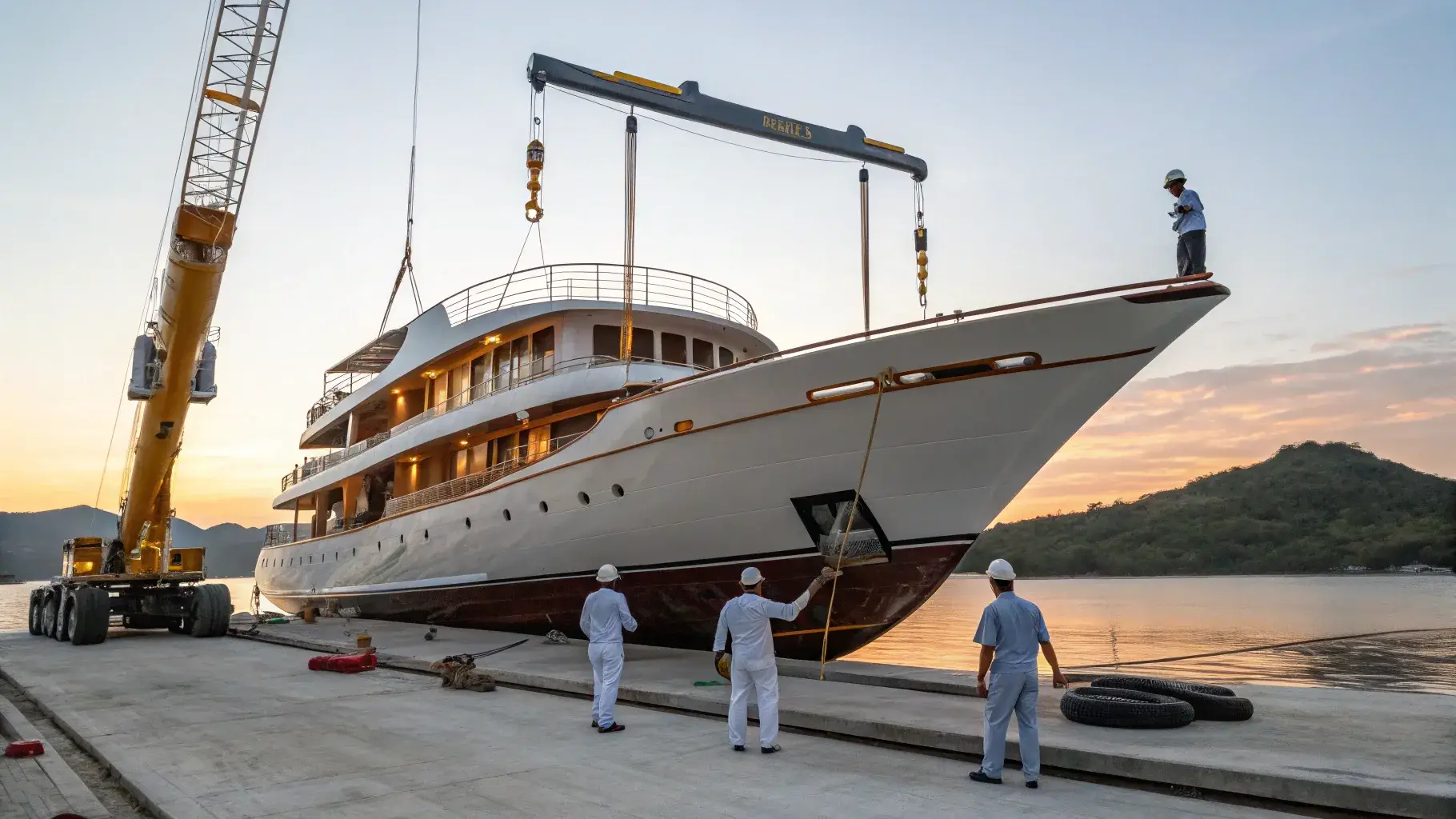
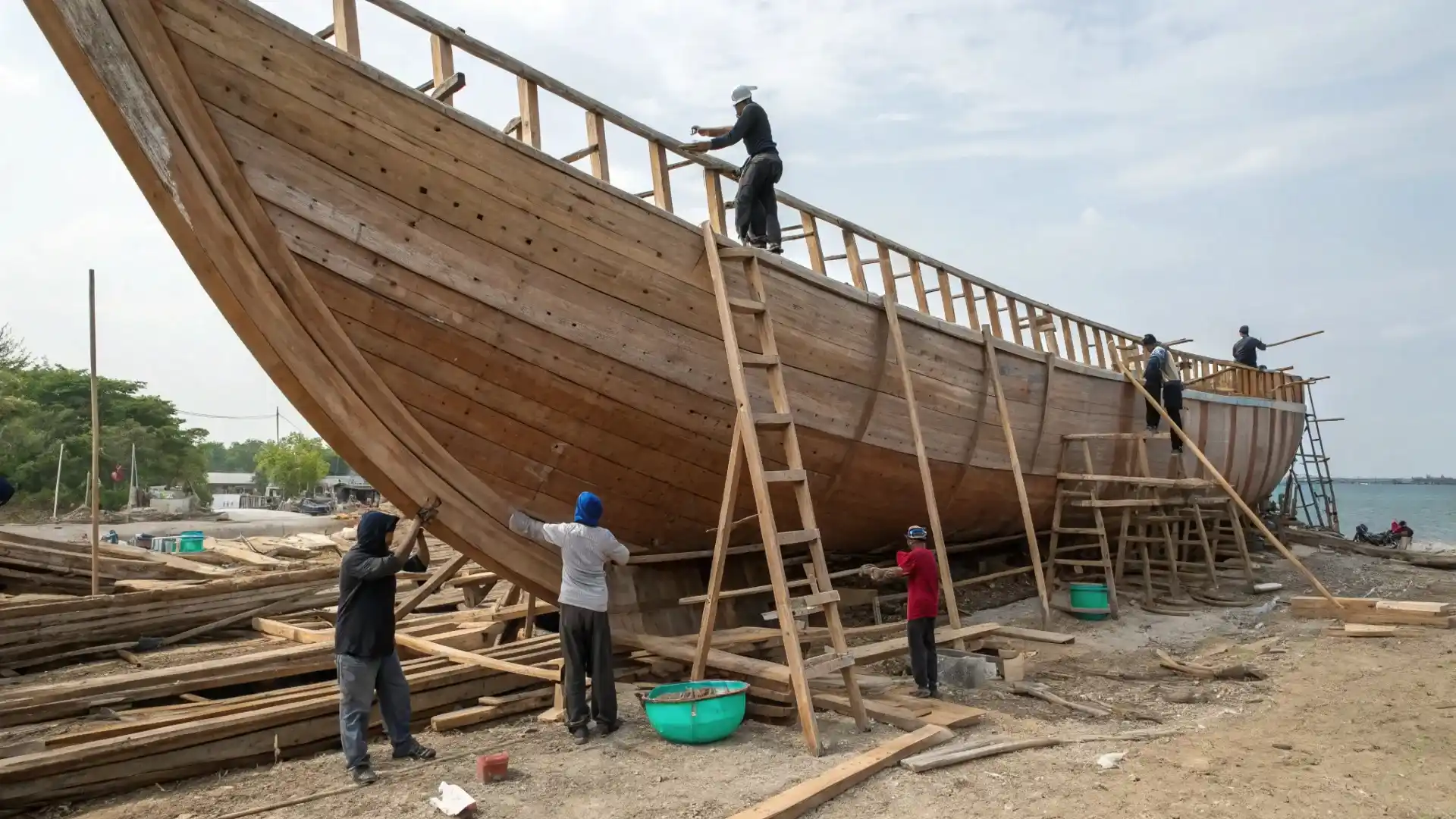
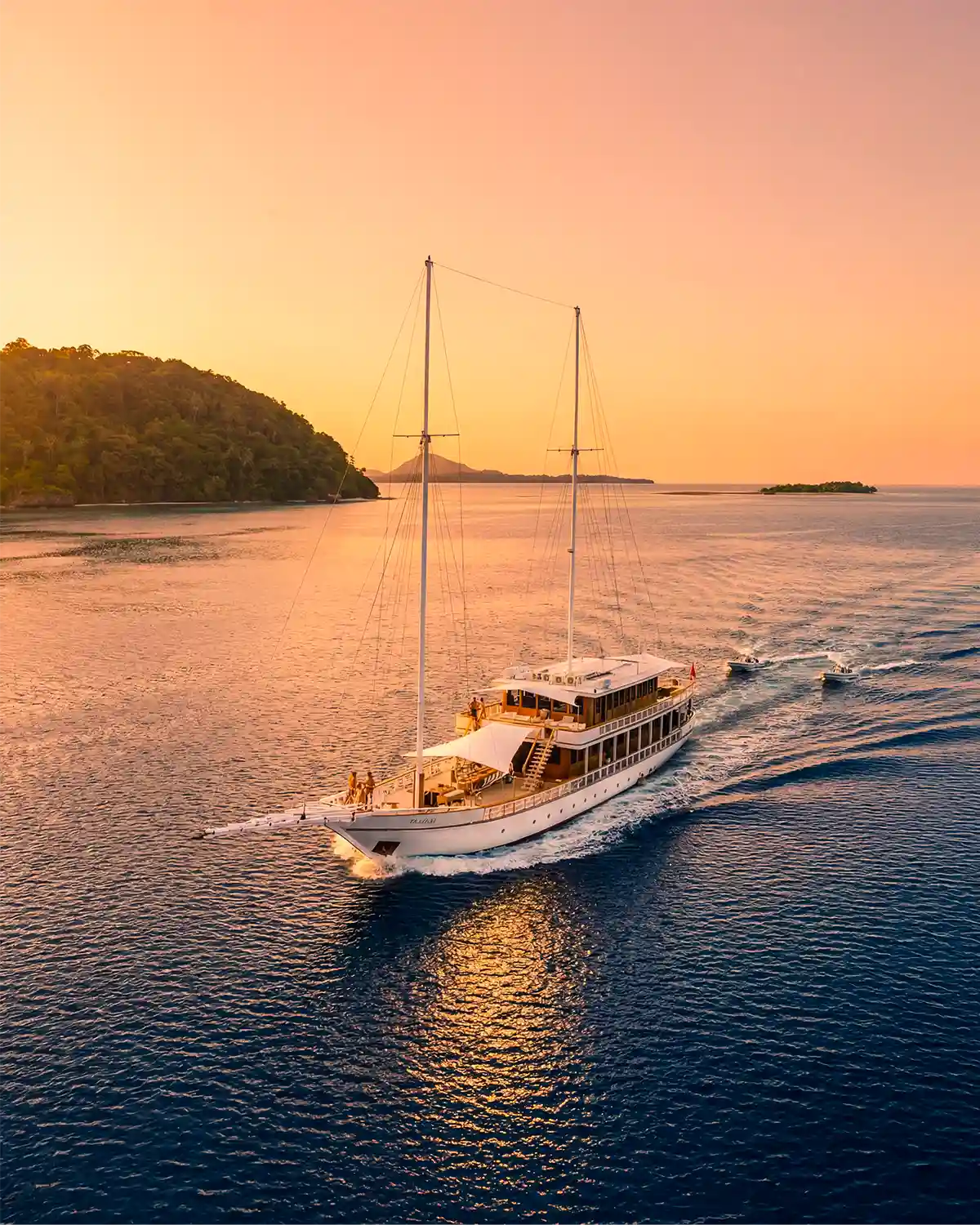
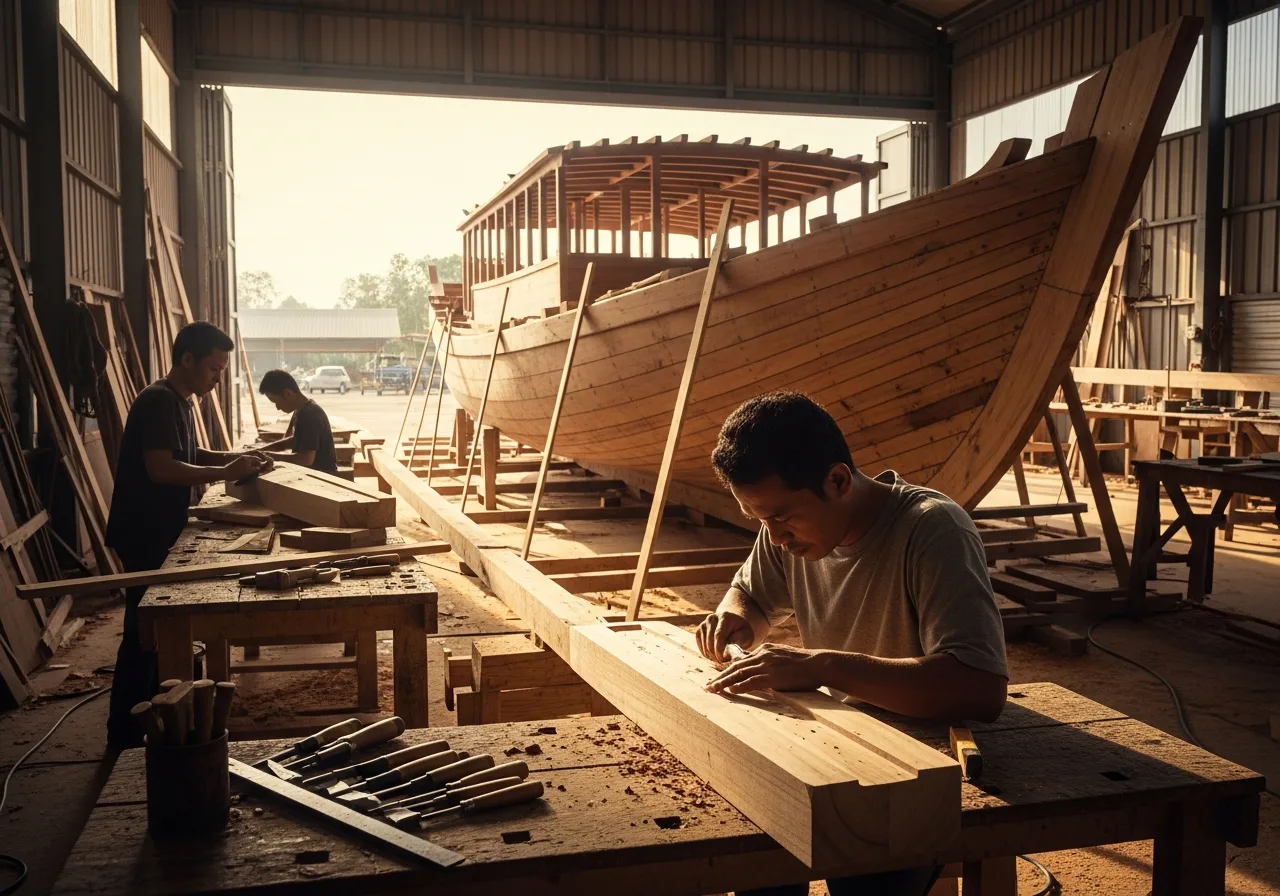
The phinisi silhouette — sweeping sheer, raked stem, twin masts carrying the gaff ketch rig — can be reproduced over any hull material. What cannot be reproduced is the construction culture underneath it. The art of pinisi boatbuilding inscribed by UNESCO in 2017 describes a wooden process: keel laid in ulin ironwood, frames of bitti hardwood shaped by eye, planking fastened by hand on an open beach. An aluminium build replaces all of that with cut plate, jigs and certified welders.
Weight and stiffness favour aluminium: a welded hull is lighter for the same strength envelope, translating into speed under power and reduced fuel burn. Class and flag approval is simpler, because plate thickness and weld quality are measurable in ways adze-shaped frames are not. Ironwood answers with qualities metal cannot match: enormous density that shrugs off contact, a soft acoustic signature underway, natural insulation in tropical heat, and a repair ecosystem that exists in every phinisi harbour in Indonesia.
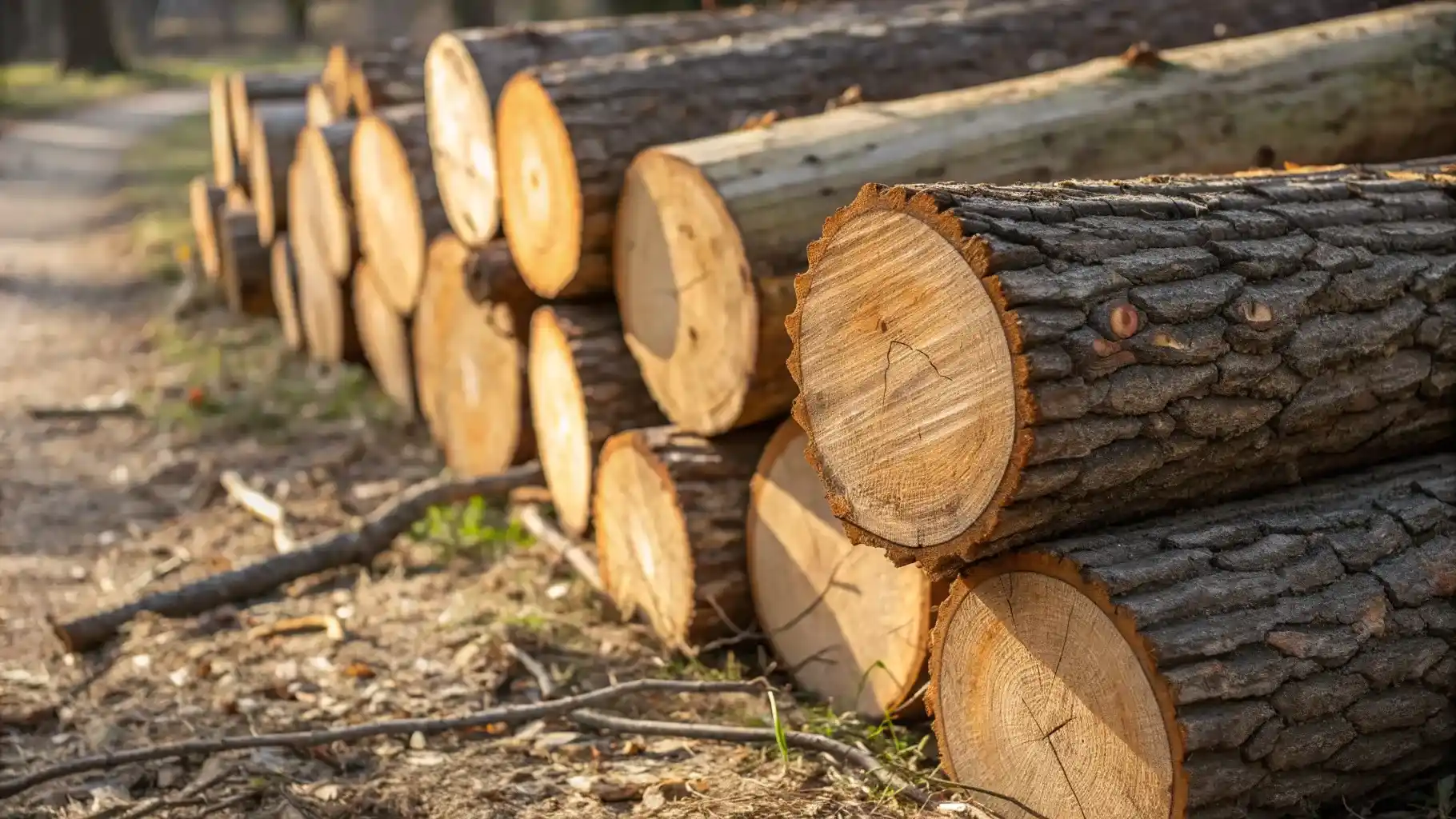
Choose aluminium when your programme is speed-sensitive, when you need simplified international class compliance for commercial registry, or when the vessel will operate far from Indonesian refit infrastructure. Choose timber when the vessel's identity is the product — charter guests book a phinisi for the story held in its planking, and surveys consistently show heritage authenticity driving rate premiums in the Komodo fleet. A middle path also exists: a traditionally raised wooden hull fitted with modern systems, watertight subdivision and engineering to charter-class standard.
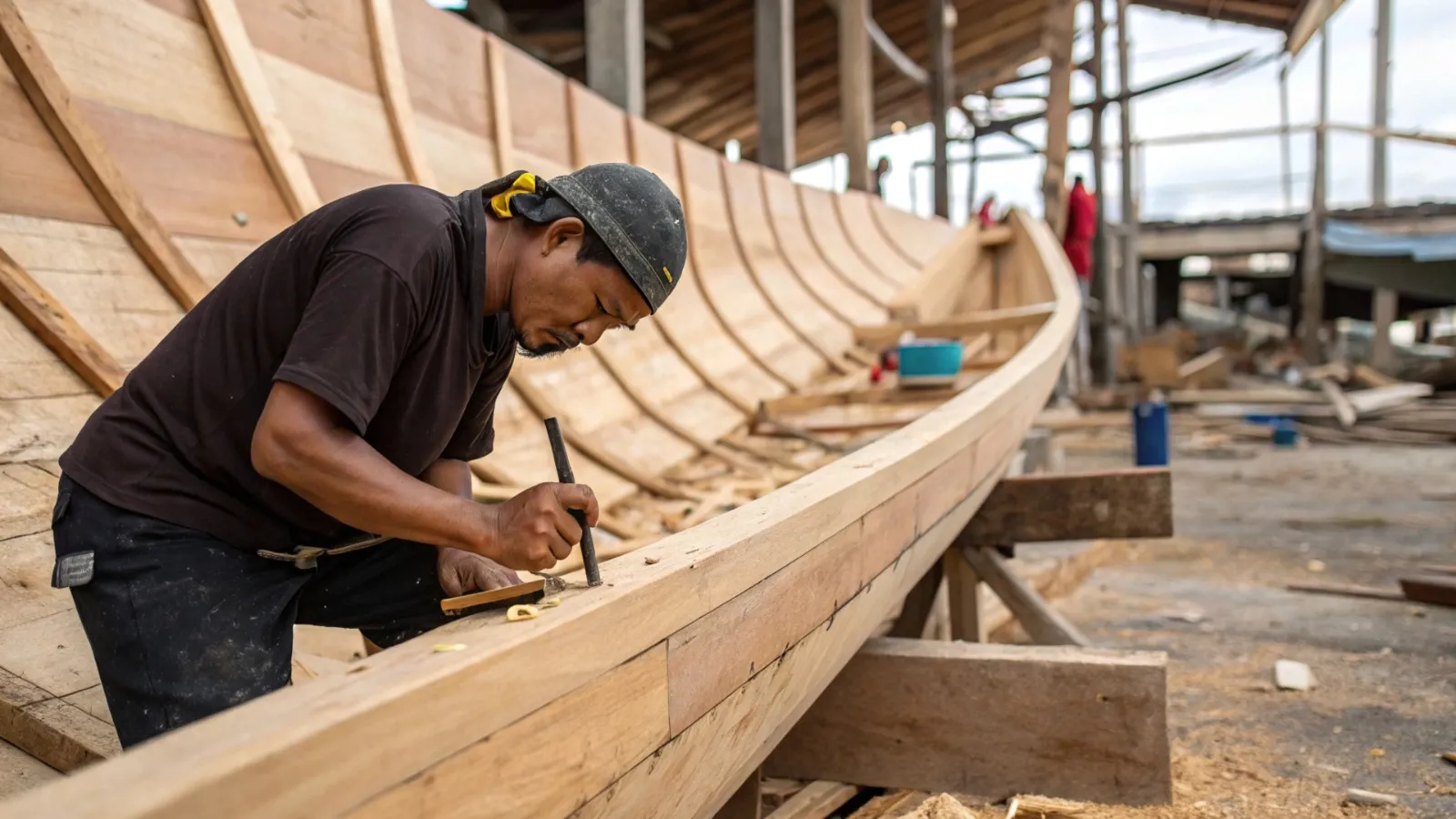
Schedules diverge less than buyers assume. A welded aluminium hull can be plated faster than timber can be raised, but outfitting, rig and interior joinery dominate the calendar either way, so both routes land in a comparable 14 to 24 month window for a 30-metre-class vessel. Provenance paperwork diverges completely. A timber build carries SVLK legal-timber certificates for its ulin, bitti and teak, tying every structural member to a verified source; an aluminium build substitutes mill certificates and weld-inspection records. Insist on the full documentation set in either case — it is what your flag registry, insurer and eventual buyer will ask to see first.
For a deeper look at where aluminium genuinely outperforms timber — and where tradition still wins — read our analysis of the aluminium phinisi question.
The rest of the answers buyers ask for before they commission.
A fiberglass phinisi builder in Indonesia usually means one of two things: a yard moulding small FRP replicas for day…
Read the guide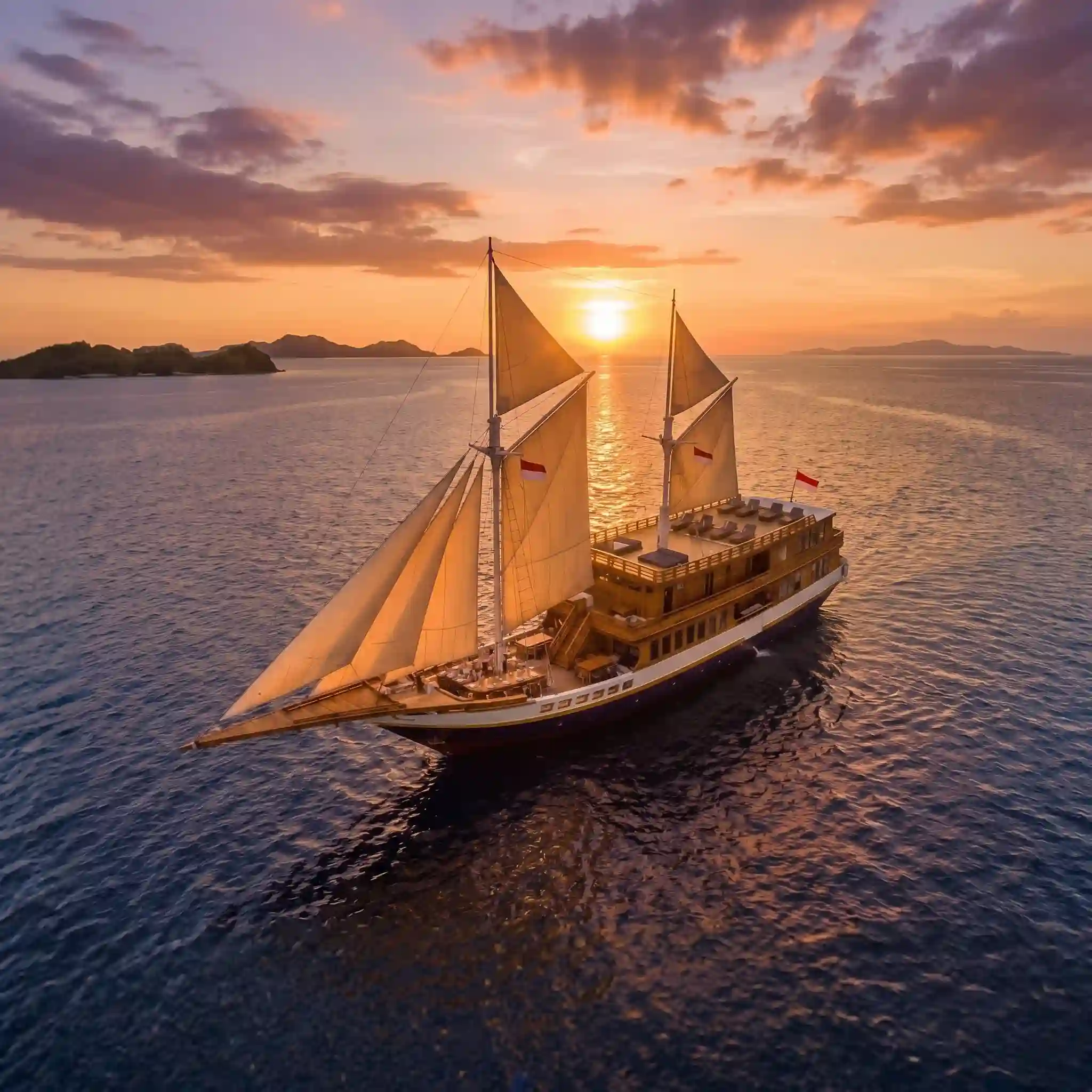
The best phinisi builder in Indonesia for charter yachts is the yard that builds for revenue service from the keel…
Read the guide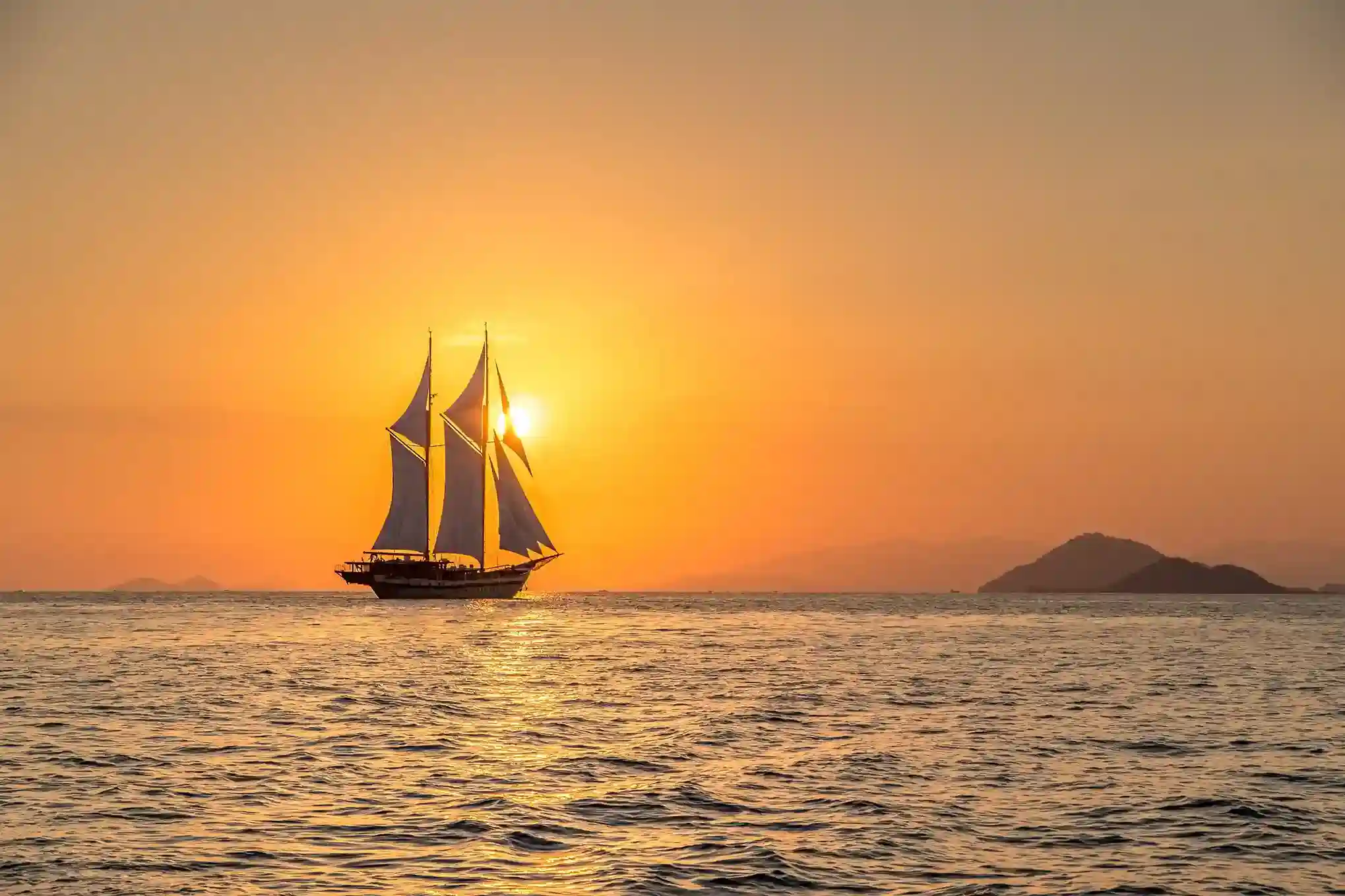
In short: 96 of the most common questions about phinisi builder indonesia, answered by our specialists.
Read the guide

Phinisi yacht builder Indonesia offers bespoke construction for discerning clients, focusing on luxury, heritage, and sustainability. Our expertise spans traditional…
Read the guide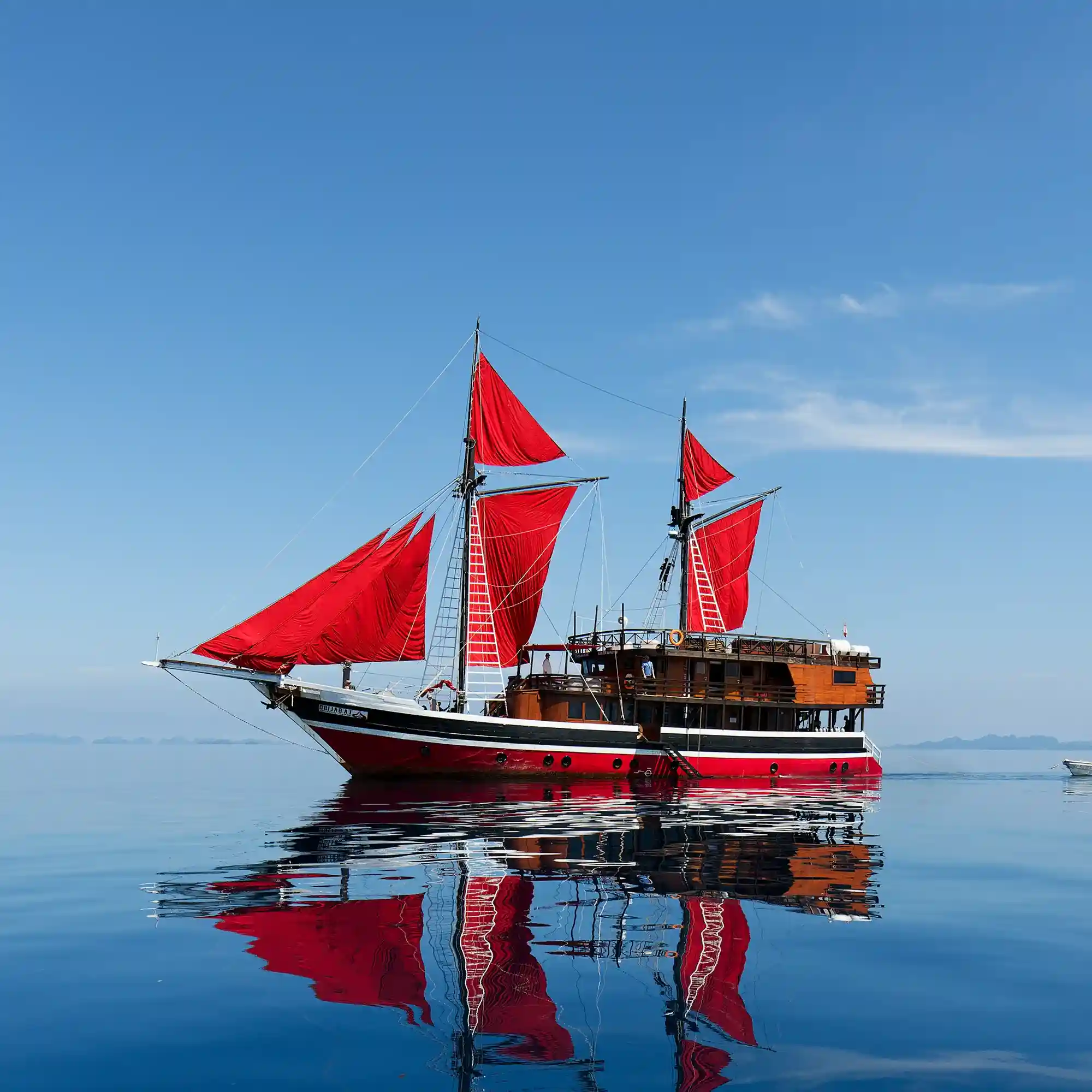
We are a leading traditional phinisi boat builder Indonesia, specialising in custom luxury phinisi boats for family charter 2027, bespoke…
Read the guide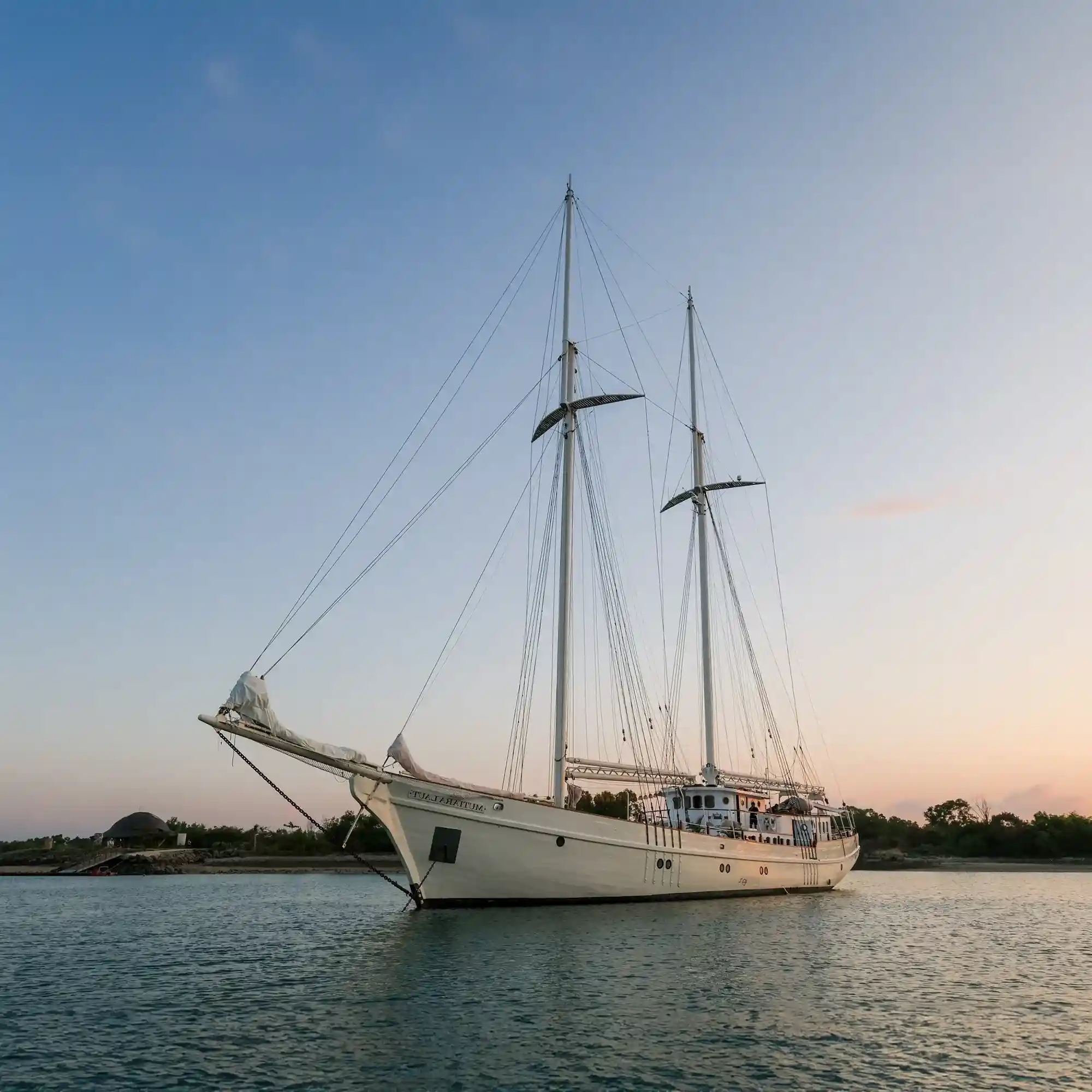
Phinisi boat construction in Indonesia encompasses a meticulous process, from initial conceptualisation and detailed design to expert fabrication and final…
Read the guide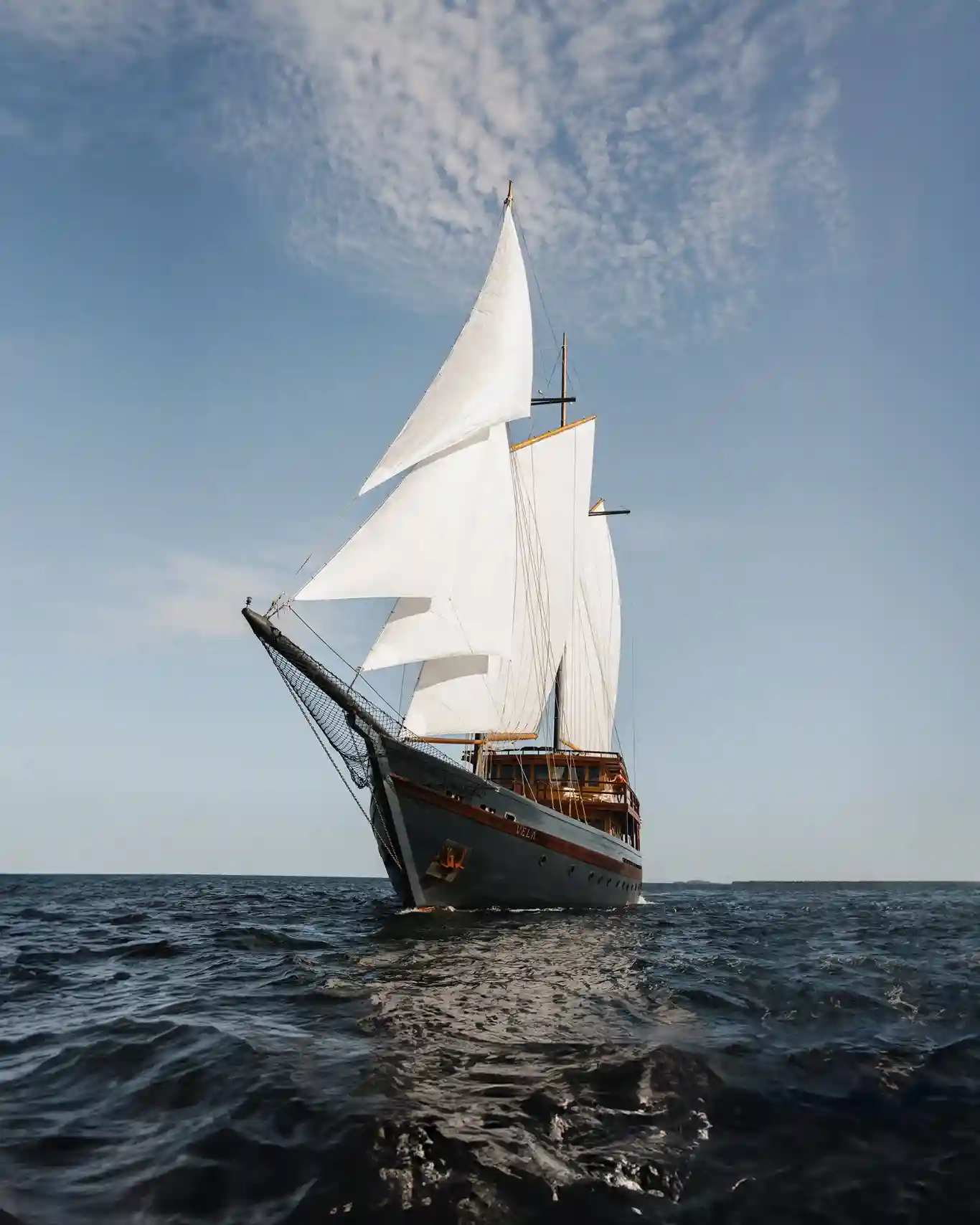
Investing in a custom phinisi yacht in Indonesia offers access to a thriving luxury tourism market, particularly for discerning international…
Read the guideTell us the length, the layout and roughly when you want to sail. You get an itemised proposal back within 24 hours.
