
Construction & Engineering
The 2027 Guide to Timber Selection for Sustainable Phinisi Construction
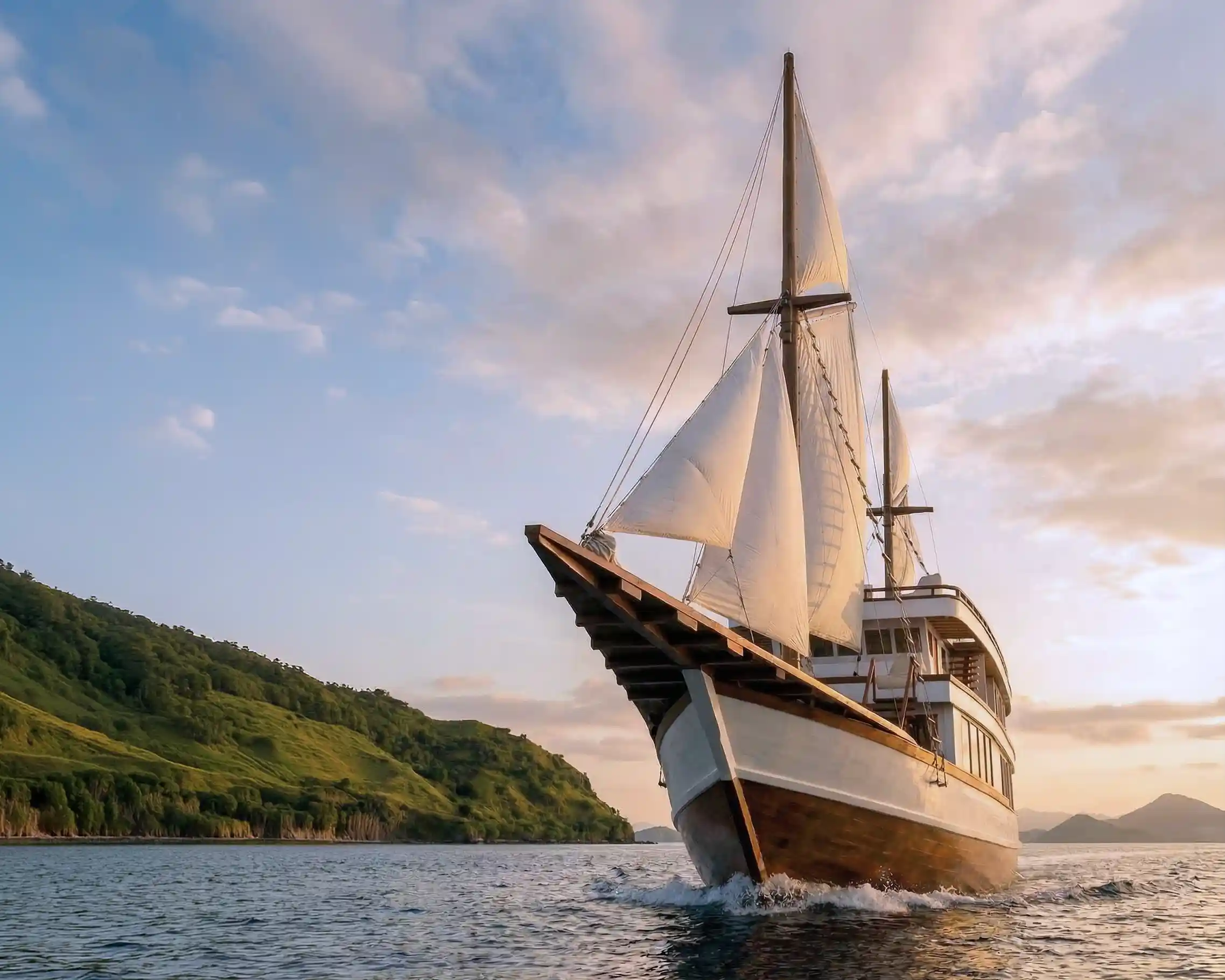
The 2027 guide to timber selection for sustainable Phinisi construction addresses the growing demand for luxury vessels. With Indonesia’s marine vessel market projected to grow at a CAGR of 5.8% from 2026–2032, and a 9.63% growth rate forecast for 2027, the phinisi building sector, centred on South Sulawesi shipyards, is expanding. Build prices typically range from US$0.4–10 million per boat.
The 2027 Guide to Timber Selection for Sustainable Phinisi Construction
Phinisi Builder Indonesia supplies high-quality timber for the construction of phinisi vessels. This guide provides essential information for importers, wholesalers, retailers, interior contractors, and trade buyers seeking to understand timber selection in the context of sustainable phinisi construction for 2027 and beyond.
Market Context and Growth in 2027
The phinisi-building niche, while small, is a fast-growing luxury and tourism segment within the broader marine vessel market. Shipyards in South Sulawesi are the primary construction hubs, with fit-out and operations concentrated in Bali, Komodo, and Raja Ampat. The Indonesian marine vessel market is projected to grow at a Compound Annual Growth Rate (CAGR) of 5.8% from 2026–2032, with a specific forecast of 9.63% growth by 2027. This expansion is supported by Indonesia’s construction industry, which is expected to grow at an average annual rate of 5.8% from 2026 to 2029.
The phinisi market has evolved significantly, transitioning from functional coastal vessels to a global luxury demand, particularly for tourism and liveaboards in Komodo and Raja Ampat. There is also increasing interest from overseas buyers in regions such as the Maldives and Mediterranean. Industry reports indicate that more luxury phinisis are being built than ever before, with individual shipyards managing multiple concurrent builds for the Southeast Asia charter market. This suggests a high-single-digit annual growth rate for phinisi order books in 2026–2027.
2027 Note on Timber Sourcing
By 2027, adherence to verified sustainable forestry practices will be a primary consideration for timber sourcing in phinisi construction. Buyers should expect increased scrutiny regarding timber origin and legal documentation, impacting lead times and material costs. This emphasis ensures long-term availability and supports international environmental standards.
Key Timber Species for Phinisi Construction
The selection of timber is critical for the structural integrity, longevity, and aesthetic appeal of a phinisi. Traditional phinisi construction relies on specific local hardwoods known for their durability and resistance to marine environments.
Teak (Tectona grandis)
- Properties: Highly durable, water-resistant, rot-resistant, insect-resistant, stable. Contains natural oils that prevent warping and cracking.
- Applications: Decking, interior joinery, furniture, decorative elements. Its golden-brown colour and fine grain are highly prized.
- Sustainability: Increasingly sourced from plantations, with certified sustainable options available.
Ironwood (Ulin / Eusideroxylon zwageri)
- Properties: Extremely dense and hard, highly resistant to rot, insects, and marine borers. Exceptional strength.
- Applications: Hull planking, keel, frames, structural components exposed to constant water contact.
- Sustainability: A protected species in some regions; sourcing requires strict adherence to legal harvesting permits.
Merbau (Intsia spp.)
- Properties: Durable, hard, resistant to termites and decay. Distinctive reddish-brown colour.
- Applications: Decking, interior flooring, structural elements where high strength is required.
- Sustainability: Available from certified sources; careful selection is necessary to avoid illegally logged timber.
Bangkirai (Yellow Balau / Shorea laevifolia)
- Properties: Hard, durable, resistant to decay and insect attack. Good for heavy construction.
- Applications: Decking, heavy structural components, exterior applications.
- Sustainability: Commonly available from plantations and managed forests.
Other Important Timbers
- Sonokeling (Rosewood / Dalbergia latifolia): Used for fine interior finishes and furniture due to its dark, rich colour and attractive grain.
- Mahogany (Swietenia macrophylla): Valued for interior panelling, furniture, and joinery. Offers good workability and stability.
Sustainable Sourcing Practices
Sustainable timber selection is paramount for responsible phinisi construction. This involves ensuring that timber is legally harvested and sourced from managed forests that promote biodiversity and long-term ecological balance. Phinisi Builder Indonesia prioritises suppliers who demonstrate verifiable sustainable forestry practices.
Key considerations for sustainable sourcing include:
- Legal Documentation: Verification of logging permits, transport documents, and export licenses.
- Certification: Preference for timber certified by recognised bodies such as the Forest Stewardship Council (FSC) or other national sustainable forest management schemes.
- Traceability: The ability to trace timber from its origin to the shipyard, ensuring transparency in the supply chain.
- Species Conservation: Awareness and avoidance of timber from endangered or protected species unless sourced under strict, government-approved conservation programmes.
Timber Treatment and Preparation
Proper treatment and preparation of timber are essential to maximise its lifespan and performance in a marine environment. This typically includes:
- Seasoning: Air-drying or kiln-drying timber to reduce moisture content, preventing warping, cracking, and fungal growth.
- Preservation: Application of wood preservatives to enhance resistance against rot, fungi, and insect infestations, particularly for timbers used in submerged or high-moisture areas.
- Finishing: Application of marine-grade varnishes, oils, or paints to protect the timber from UV radiation, saltwater, and abrasion.
Quality Control in Timber Selection
Phinisi Builder Indonesia maintains rigorous quality control standards for all timber supplied. This ensures that the timber meets the structural and aesthetic requirements of luxury phinisi construction.
| Aspect | Description |
|---|---|
| Moisture Content | Checked to ensure optimal levels for stability and to prevent future issues. |
| Knotting & Defects | Inspected for excessive knots, cracks, splits, and other defects that could compromise structural integrity or appearance. |
| Grain & Figure | Assessed for consistency and suitability for specific applications, such as decking or interior panelling. |
| Dimensions | Verified to match specifications, ensuring accurate fit and minimal wastage during construction. |
Our commitment to quality ensures that the raw materials contribute to the longevity and value of the finished vessel.
Future Trends in Phinisi Timber Sourcing
The phinisi construction industry is increasingly focusing on advanced material science and sustainable practices. While traditional hardwoods remain central, there is growing interest in:
- Engineered Wood Products: Laminated timbers and composites that offer enhanced strength-to-weight ratios and design flexibility, potentially reducing reliance on large-dimension solid timber.
- Alternative Sustainable Species: Research into lesser-known, fast-growing timber species from well-managed plantations that can offer similar properties to traditional hardwoods.
- Advanced Preservation Techniques: Developments in eco-friendly wood treatments that extend timber life without using harmful chemicals.
Phinisi Builder Indonesia continues to monitor these trends to provide the most current and responsible timber solutions for our clients.
Phinisi Construction Timelines and Logistical Considerations
Phinisi construction is a labour-intensive process, demanding significant planning and coordination. The typical build duration for a luxury phinisi ranges from 18 to 36 months, influenced by vessel size, design complexity, and the availability of specialised timber and skilled artisans. Our South Sulawesi shipyards operate year-round, but timber seasoning and specific joinery tasks may be seasonally adjusted to optimise material stability.
Logistical planning is critical for timely delivery. Raw timber is sourced primarily from Kalimantan, Sulawesi, and Papua, requiring overland and sea transport to the shipbuilding sites in Ara–Bulukumba. Following hull completion, vessels are often relocated to fit-out and operations hubs in Bali, Komodo, or Raja Ampat for interior finishing, system installation, and final outfitting. This multi-stage process necessitates precise scheduling and strong supply chain management to meet client expectations.
- Average Build Duration: 18-36 months (hull and superstructure)
- Primary Shipyard Locations: Ara–Bulukumba, South Sulawesi
- Fit-Out & Operations Hubs: Bali, Komodo, Raja Ampat
- Key Logistical Dependencies: Timber transport, skilled labour availability, inter-island vessel movements
Materials Sourcing and Supply Chain Resilience
The construction of a phinisi relies on specific timber species, primarily Ulin (Borneo Ironwood), Teak, Merbau, and Bangkirai, selected for their durability and suitability for marine environments. Sustainable sourcing is a core principle at Phinisi Builder Indonesia. We work directly with government-certified timber concessions and suppliers who adhere to strict harvesting regulations, ensuring legality and responsible forest management. This direct engagement mitigates supply chain risks and supports long-term material availability.
Our supply chain strategy focuses on resilience through diversified sourcing and strategic inventory management. We maintain relationships with multiple timber suppliers across Indonesia to mitigate regional supply disruptions. For interior finishes and bespoke furniture, we integrate local Balinese craftsmanship and materials, offering a range of options from solid teak to more contemporary composite panels, depending on the vessel’s design brief. This integrated approach ensures consistent quality and timely delivery of components for both structural and aesthetic elements.
| Timber Species | Primary Application | Sourcing Region |
|---|---|---|
| Ulin (Borneo Ironwood) | Hull, Keel, Frames | Kalimantan |
| Teak | Decking, Interior Joinery | Java, Sulawesi |
| Merbau | Decking, Structural Elements | Kalimantan, Papua |
| Bangkirai | Decking, Sub-structures | Kalimantan, Sulawesi |
For detailed specifications or to discuss your timber requirements for phinisi construction, request a wholesale quote on WhatsApp. We are ready to assist trade buyers with high-quality, sustainably sourced timber.
Continue reading: Buyer Guide: Comparing Delivery Times for 45m vs. 60m Phinisis · Full 2027 Cost Analysis: Building a 45m Phinisi in Indonesia · B2B Partnership Program
Keep reading
More from the yard.
Construction & Engineering
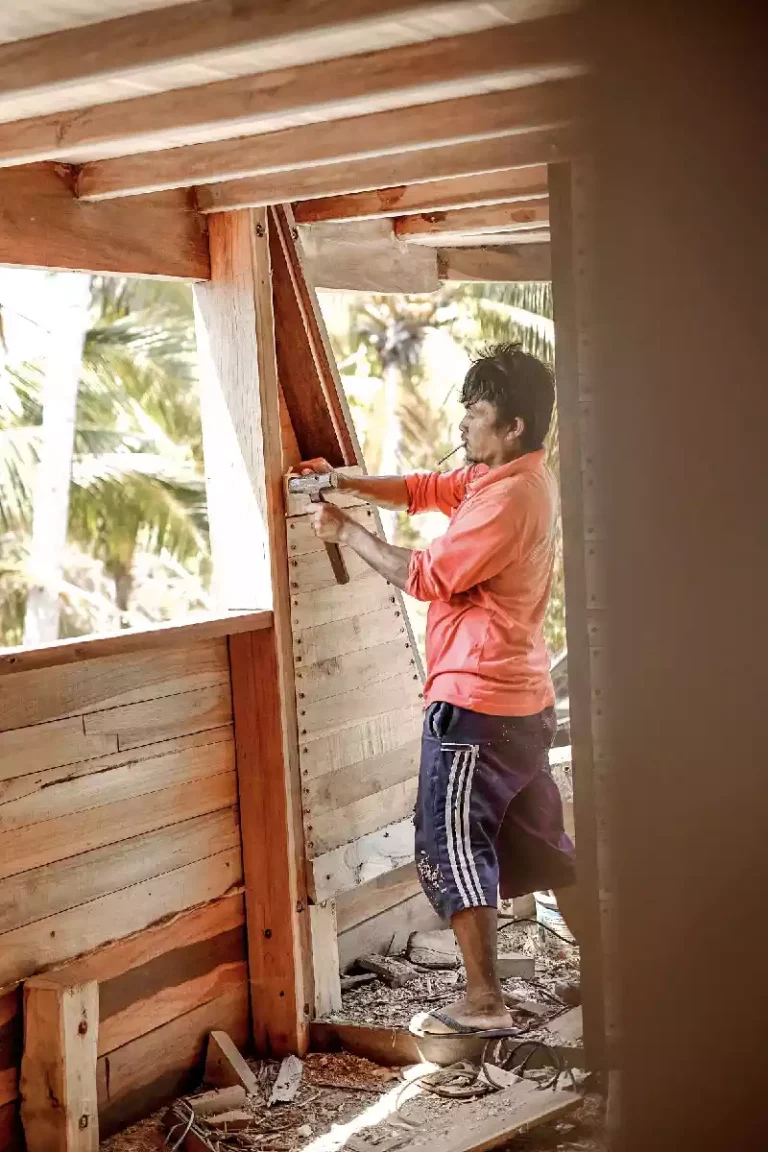
Interior Fit-Out Sequencing on a Phinisi Build
Phinisi fit-out follows one law: nothing closes until what lives behind it is installed, tested and photographed. The working sequence…
Construction & Engineering
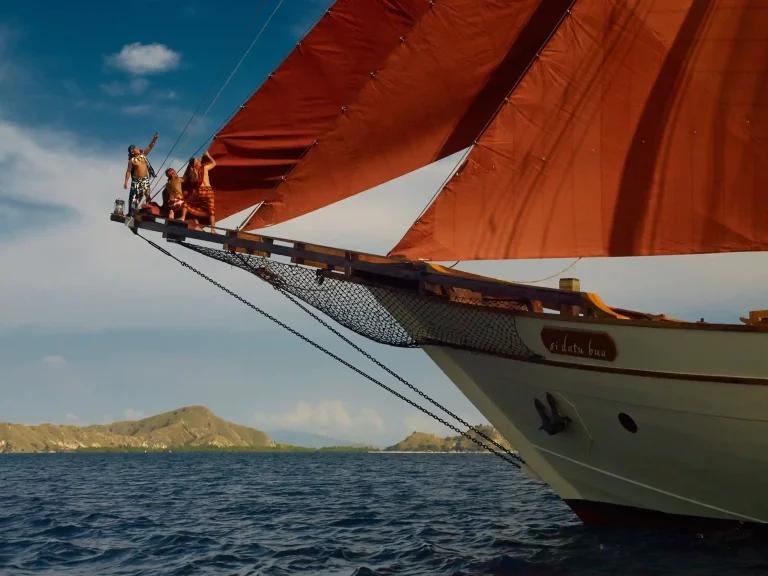
Phinisi Deck Hardware: Sourcing Winches and Fittings That Last
Phinisi deck hardware splits into load-bearing items — winches, windlass, cleats, chainplates, blocks — which must be load-rated and documented,…
Construction & Engineering
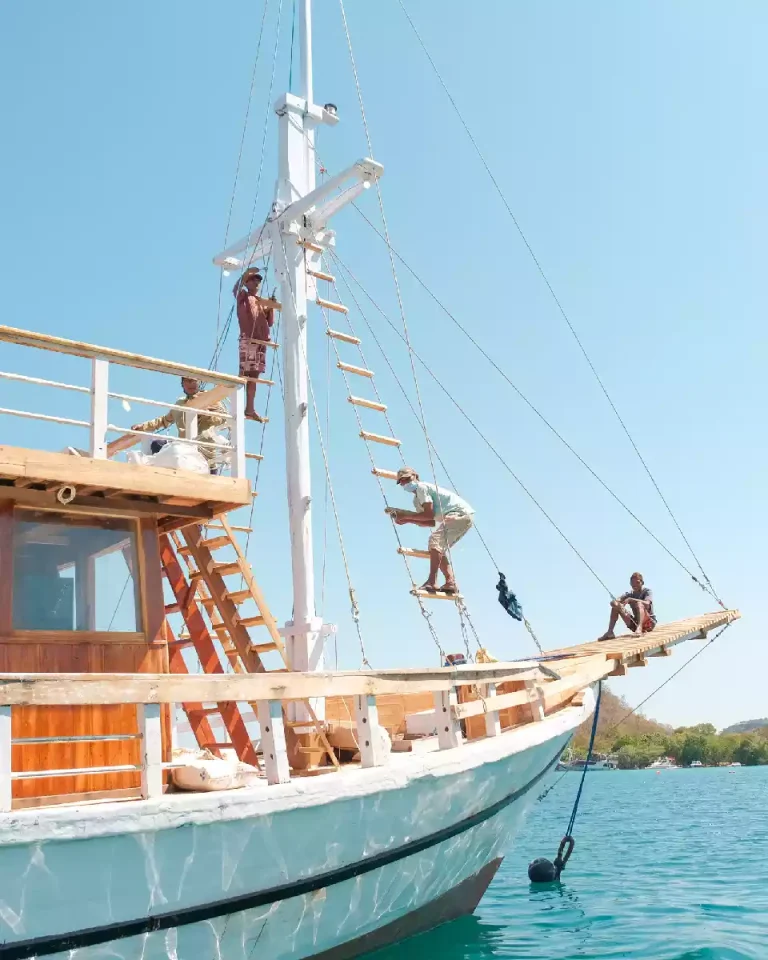
Tank Capacities on New Phinisi: Planning Water, Fuel and Waste
Size phinisi tanks from the itinerary, not the hull: budget roughly 200 litres of fresh water per person per day…
Construction & Engineering
Engine Selection for a New Phinisi: Power Bands That Fit the Hull
A displacement phinisi needs far less power than owners assume: roughly 150–250 hp serves a 25–30 m hull, 300–500 hp a 35–45 m vessel,…
Construction & Engineering
Masts and Rigging for New Phinisi: Makers, Materials, Loads
A new phinisi carries a gaff-ketch rig of two masts and typically seven sails. Spars are built either from laminated…
Construction & Engineering
Fiberglass-Sheathed Phinisi Hulls: Hybrid Construction Explained
A fiberglass-sheathed phinisi is a traditionally planked wooden hull wrapped below and around the waterline in epoxy-set glass cloth. Done…
Construction & Engineering
The Aluminium Phinisi Question: Feasibility Beyond Tradition
An aluminium phinisi is feasible as a naval-architecture exercise — a metal hull carrying phinisi lines and rig — but…
Construction & Engineering
How to Specify Your Custom Phinisi in 2027: Engine, Cabin, and Tech Options
Specifying a custom phinisi in 2027 requires understanding a dynamic market. Build prices typically range from US$0.4–10 million, centered on…